My Role
Lead UX Designer
Timeline
3 weeks (2025)
Industry
Travel / Travel Tech
Platform
Application

Overview
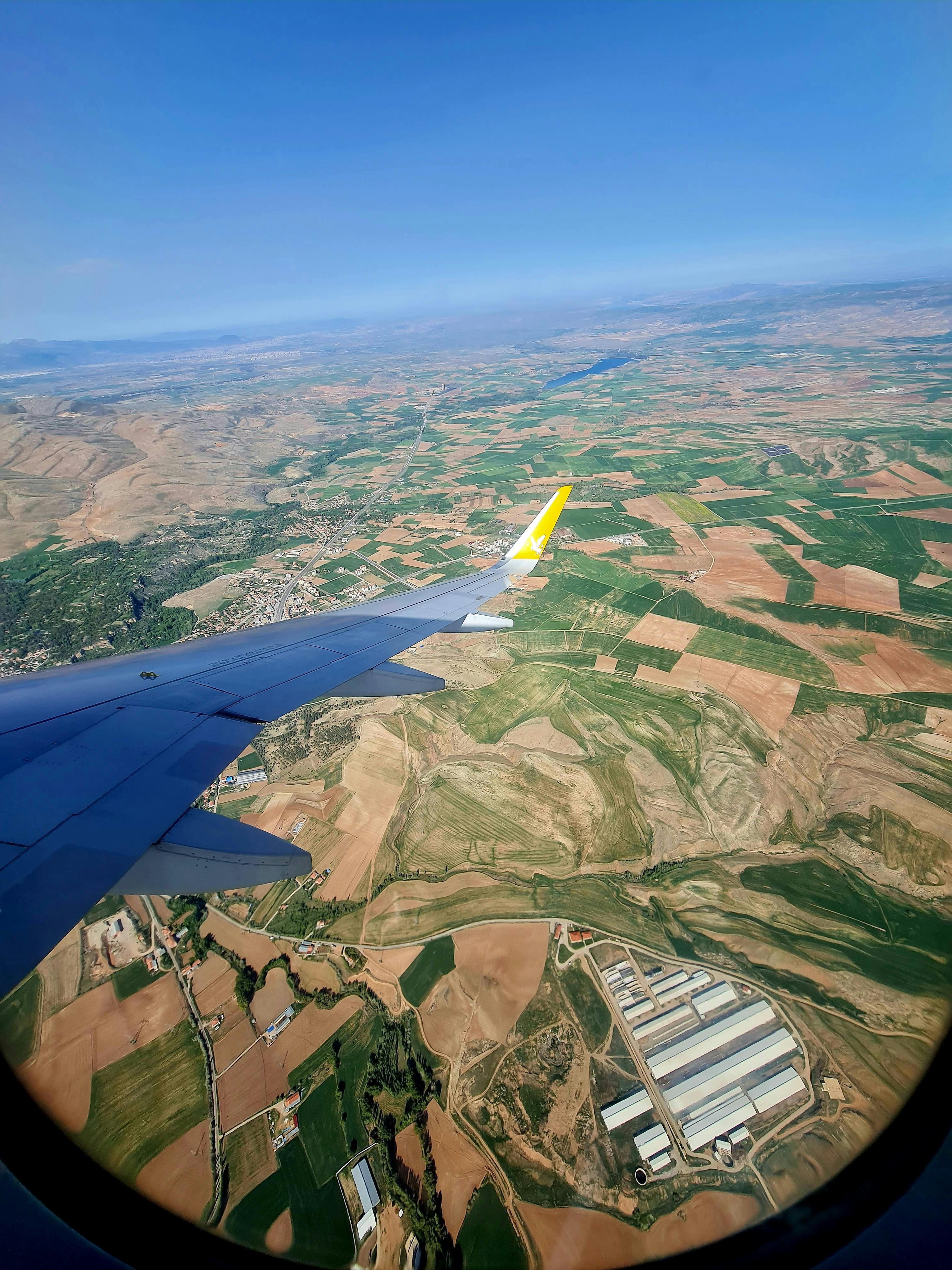
The idea for Eye-Fly came from the client’s personal experience of being anxious when flying. She felt that a lack of context during the journey, not knowing where she was, what was beneath her, or what she was passing over, made the experience feel more unsettling.
Eye-Fly was imagined as a way to turn that uncertainty into curiosity, using location-based information, landmarks and educational content to make travel feel more engaging and less intimidating.

The Problem
One of the most valuable parts of this project was taking an exciting idea and grounding it in real user needs.
Through workshop conversations and early exploration, two core challenges became clear:
1
The first was that travellers are often curious about the world around them, but have no easy way to explore what they are seeing in the moment. They might notice a landmark, landscape or place of interest, but the moment passes quickly and that curiosity usually goes nowhere.
2
The second was that travel experiences often feel generic. People have different interests, different reasons for travelling, and different levels of engagement, but existing in-flight experiences rarely adapt to that. There was also no meaningful way to save places, build on discoveries later, or turn travel inspiration into future action.
Workshop and discovery
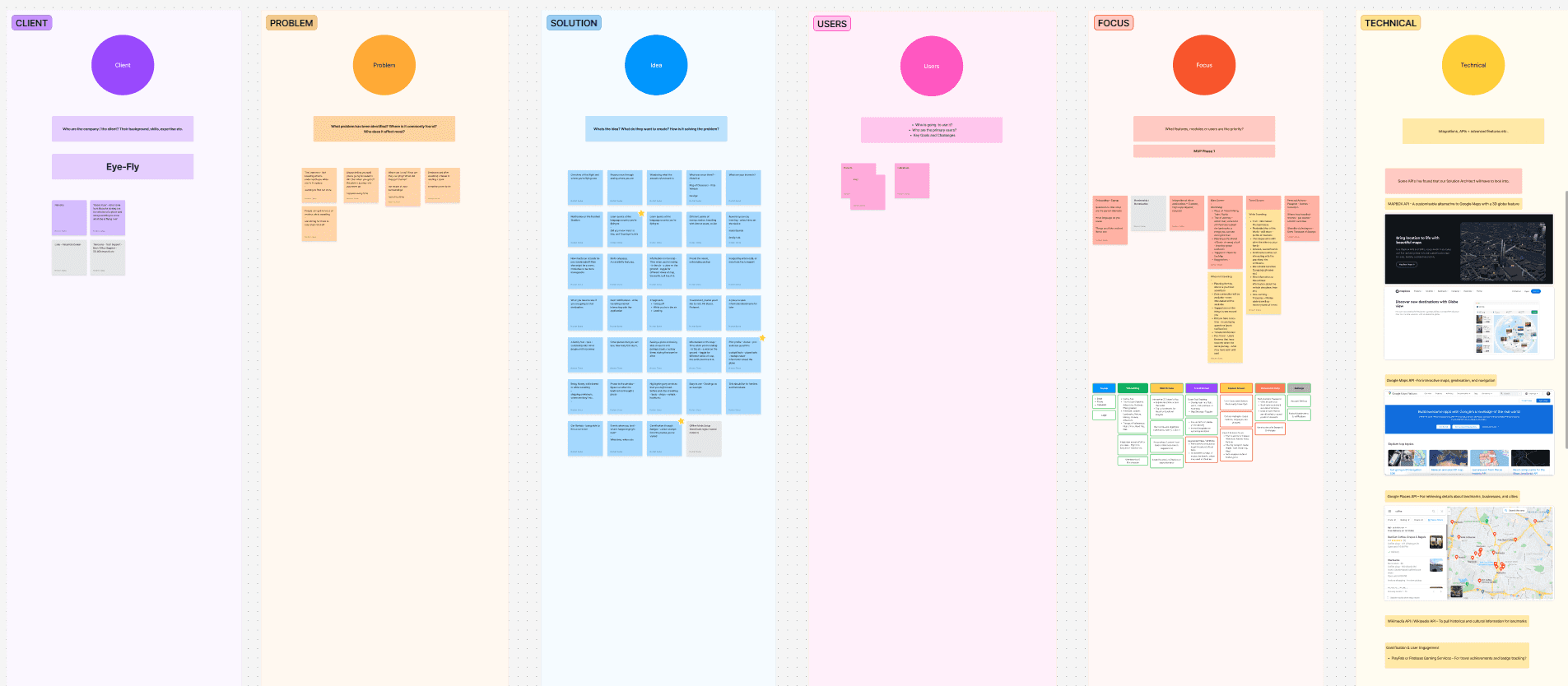
I worked with the client to explore the idea in more depth through a collaborative workshop and discovery phase. This helped move the concept beyond a broad ambition and into something more structured.
Together, we unpacked:
who the experience was really for
what problems were worth solving first
where the strongest value sat for users
which features felt exciting but non-essential
what a realistic MVP might include
This stage was important because there were lots of possible directions the product could take. The challenge was not a lack of ideas — it was identifying which ones would create the most value early on.
Understanding the users
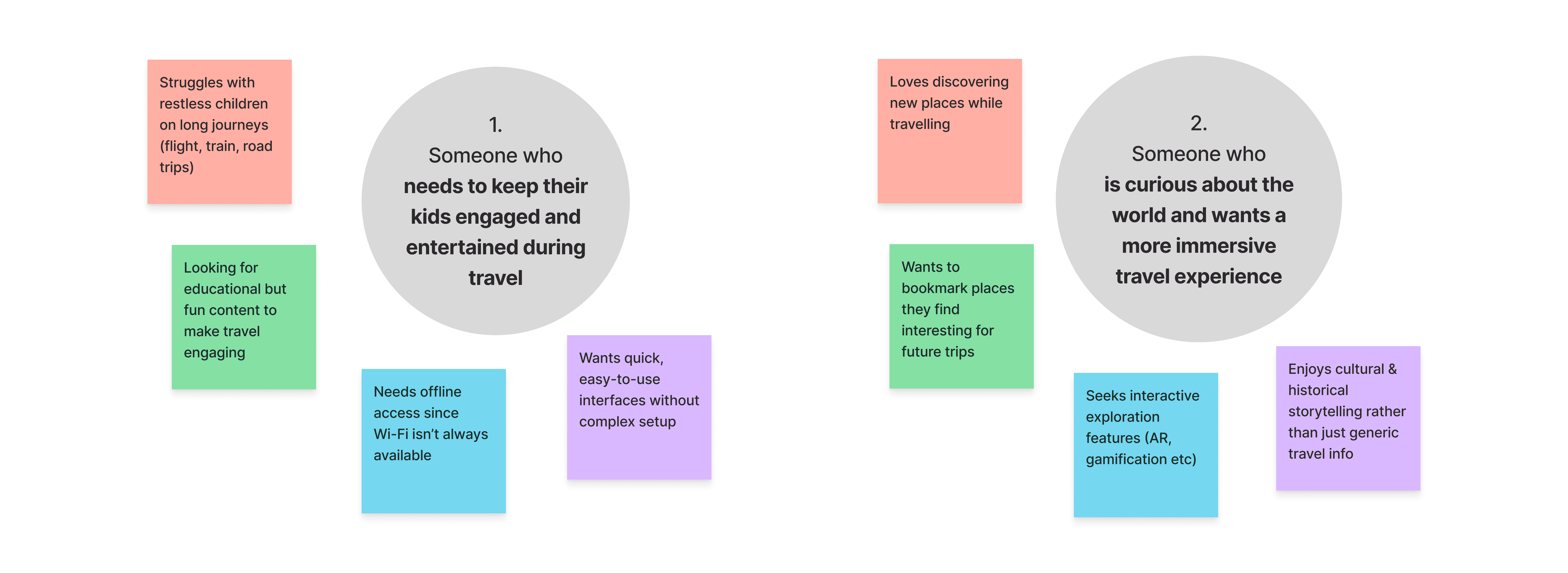
As the concept developed, two key audience types stood out.
Parents travelling with children
For families, the journey itself can be the hardest part. Keeping children entertained, reducing stress, and finding experiences that are both engaging and educational all became important considerations. This meant the product needed to feel simple, low-friction and useful even in moments where attention is limited.
Curious independent travellers
For solo travellers or explorers, the appeal was more about discovery. This audience wanted richer context, more immersive information, and the ability to bookmark or revisit places that sparked their interest. For them, the value was not just in the moment of travel, but in extending that discovery beyond the journey.
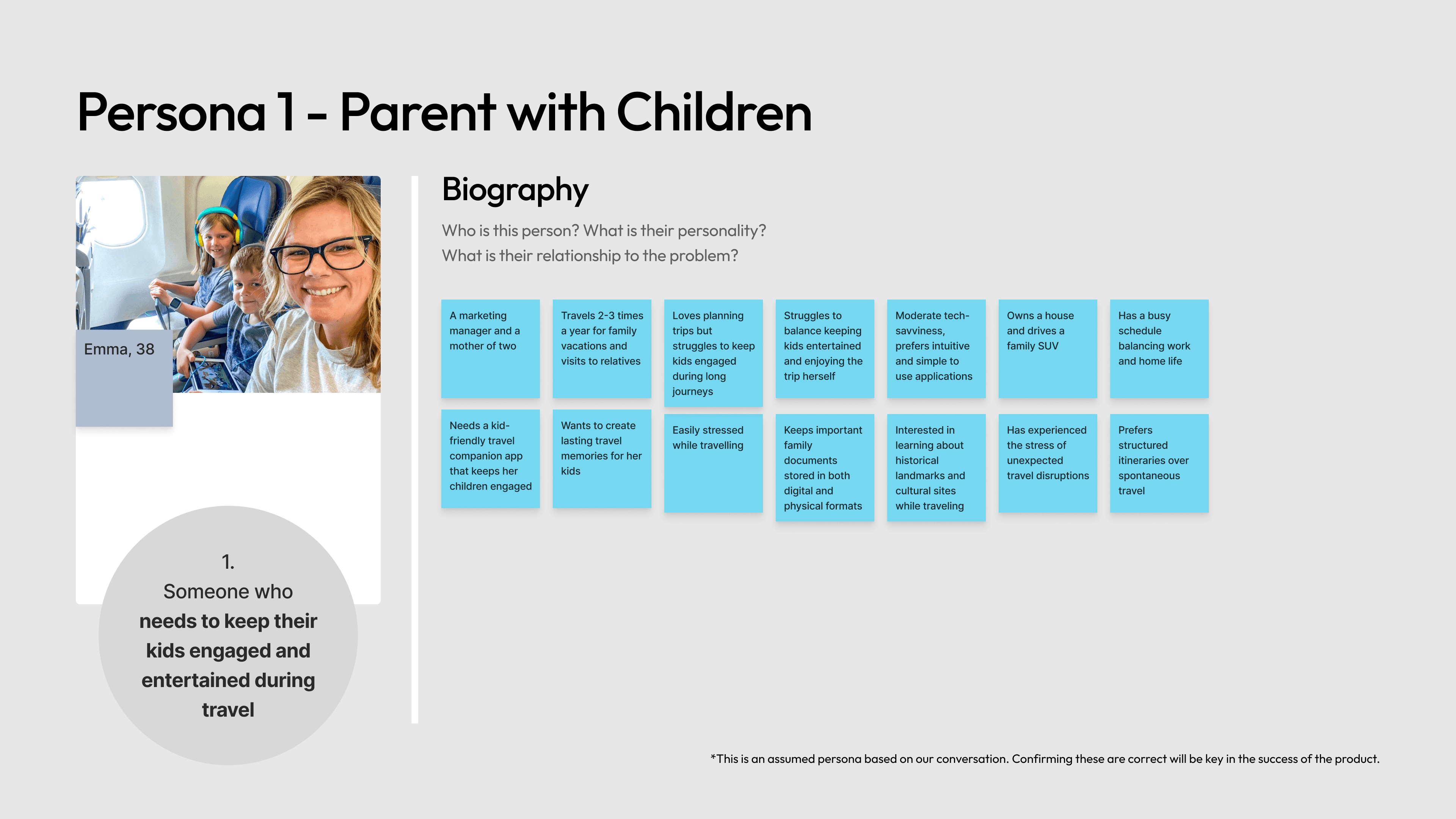
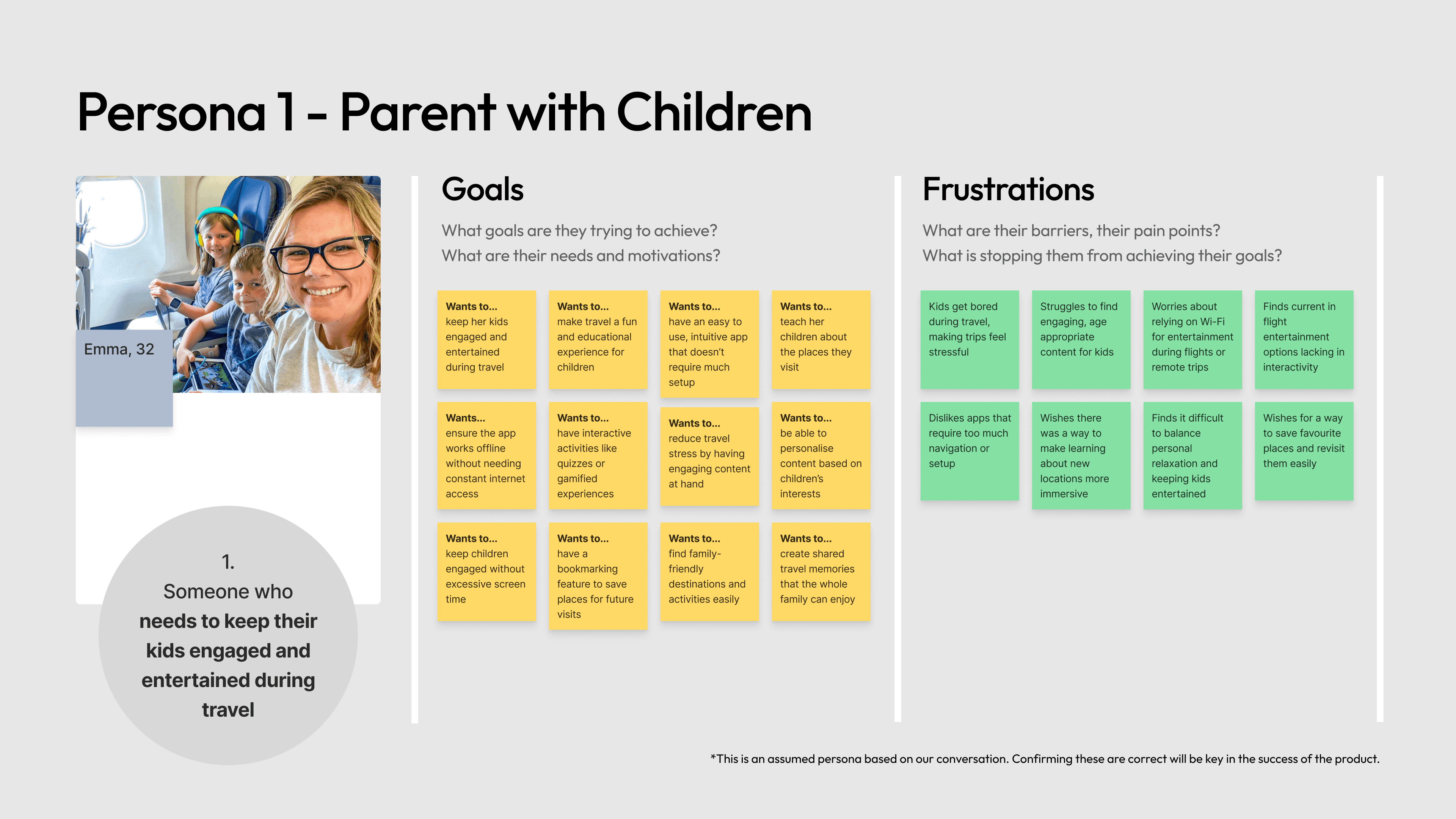
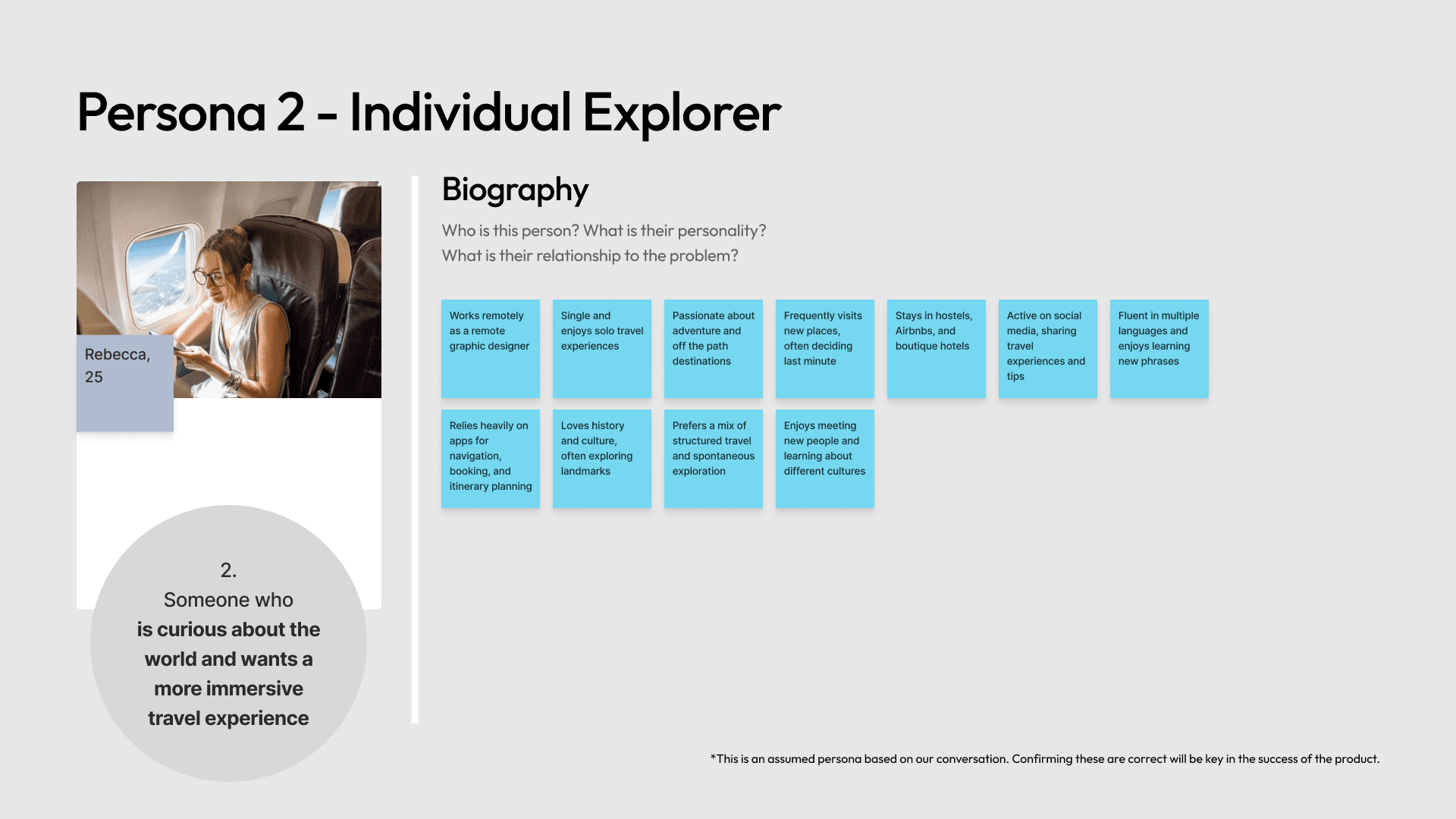
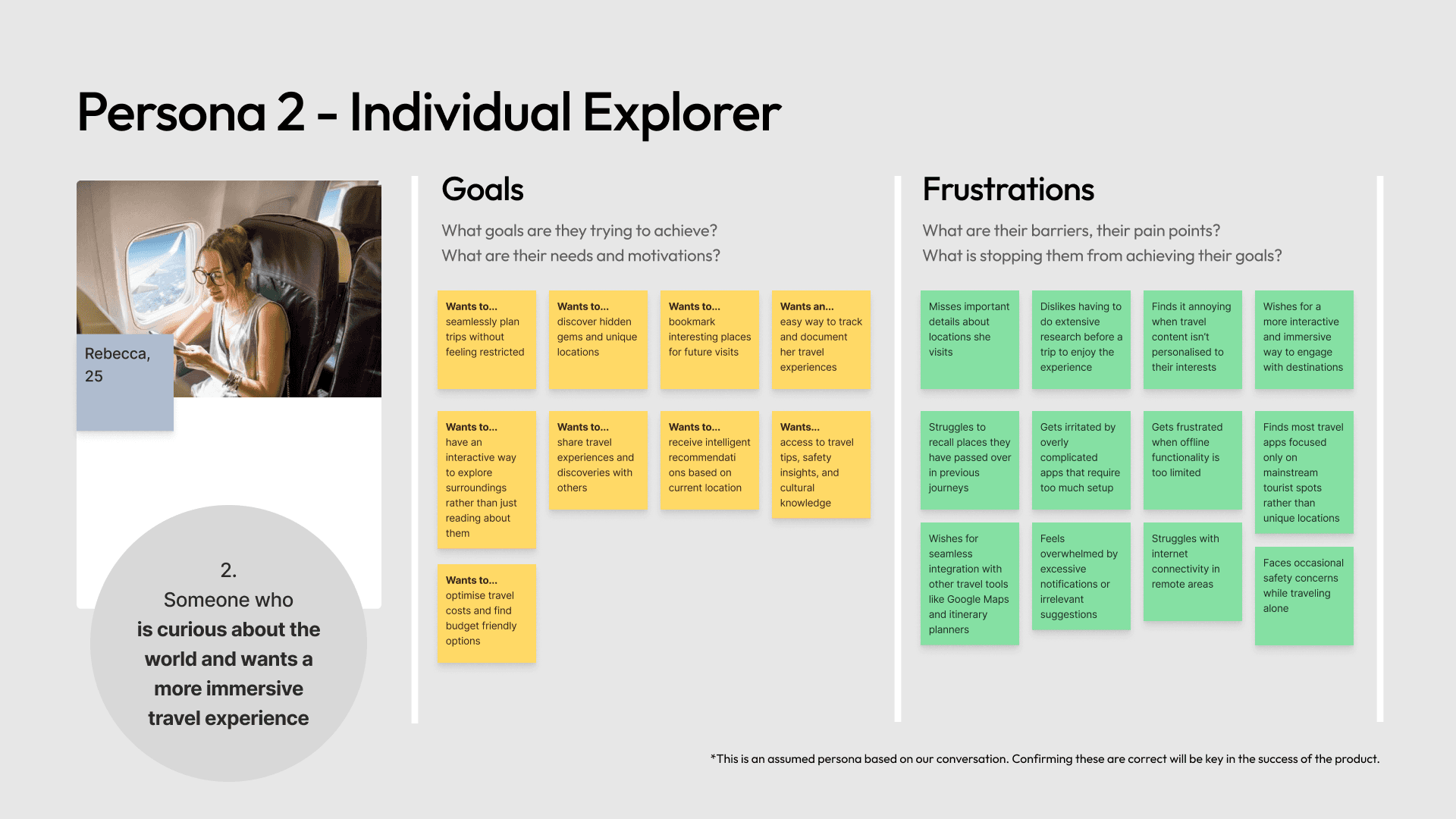
These two audiences helped shape the concept in different ways, while also revealing some shared needs: personalisation, ease of use, relevance and the ability to continue the experience later.
Design Process
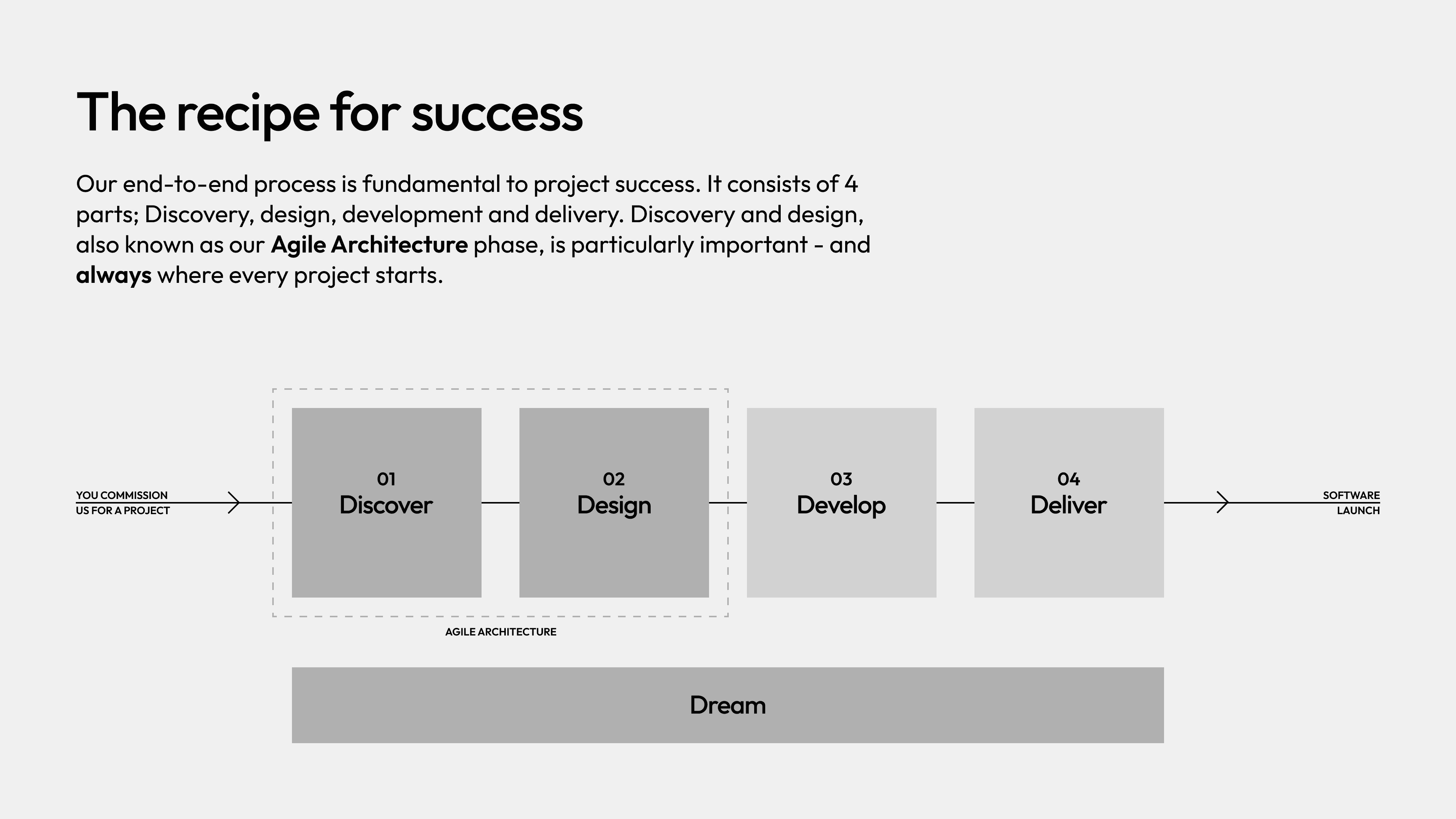
Shaping the experience
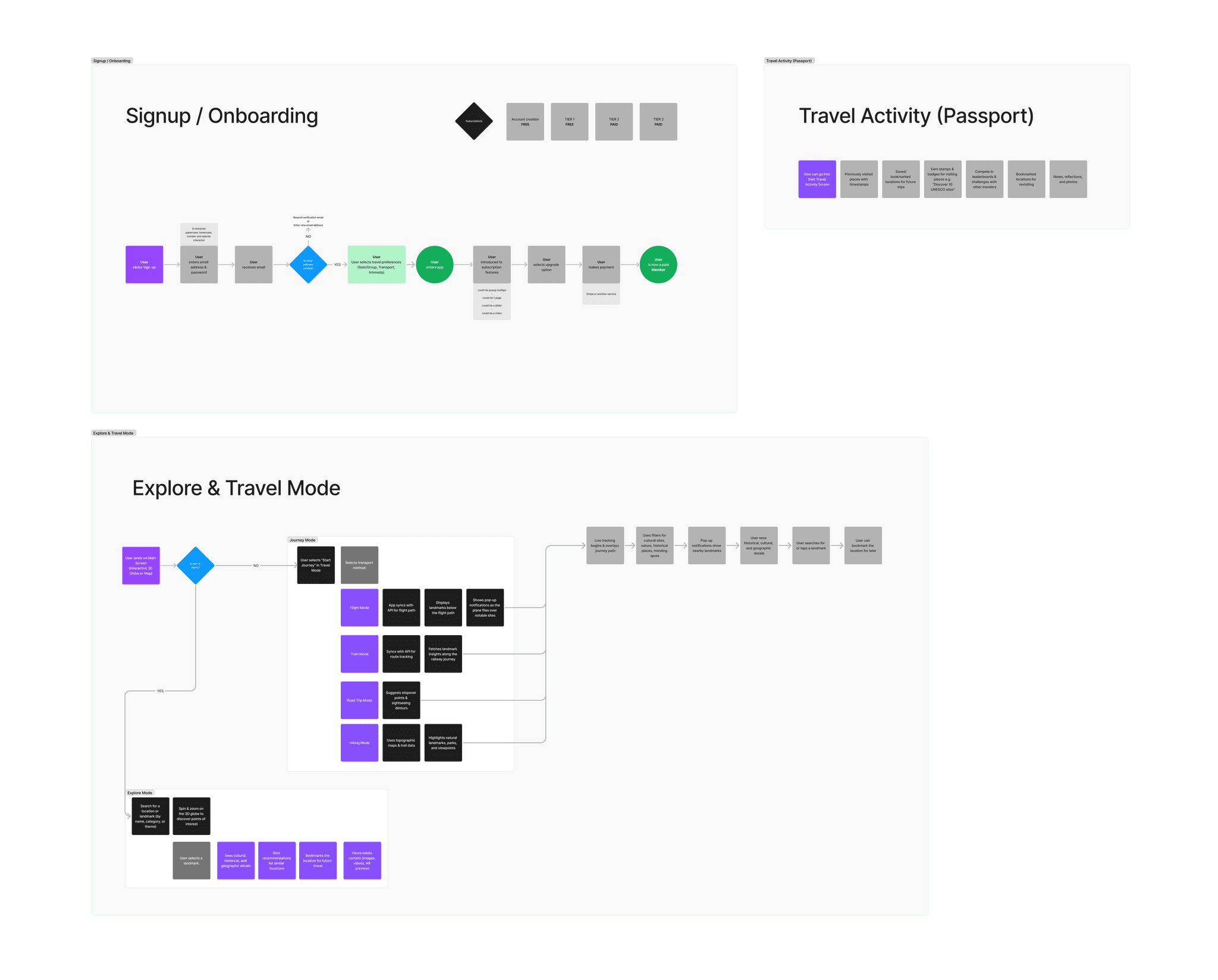
Once the user needs were clearer, I started shaping the product into a more defined experience.
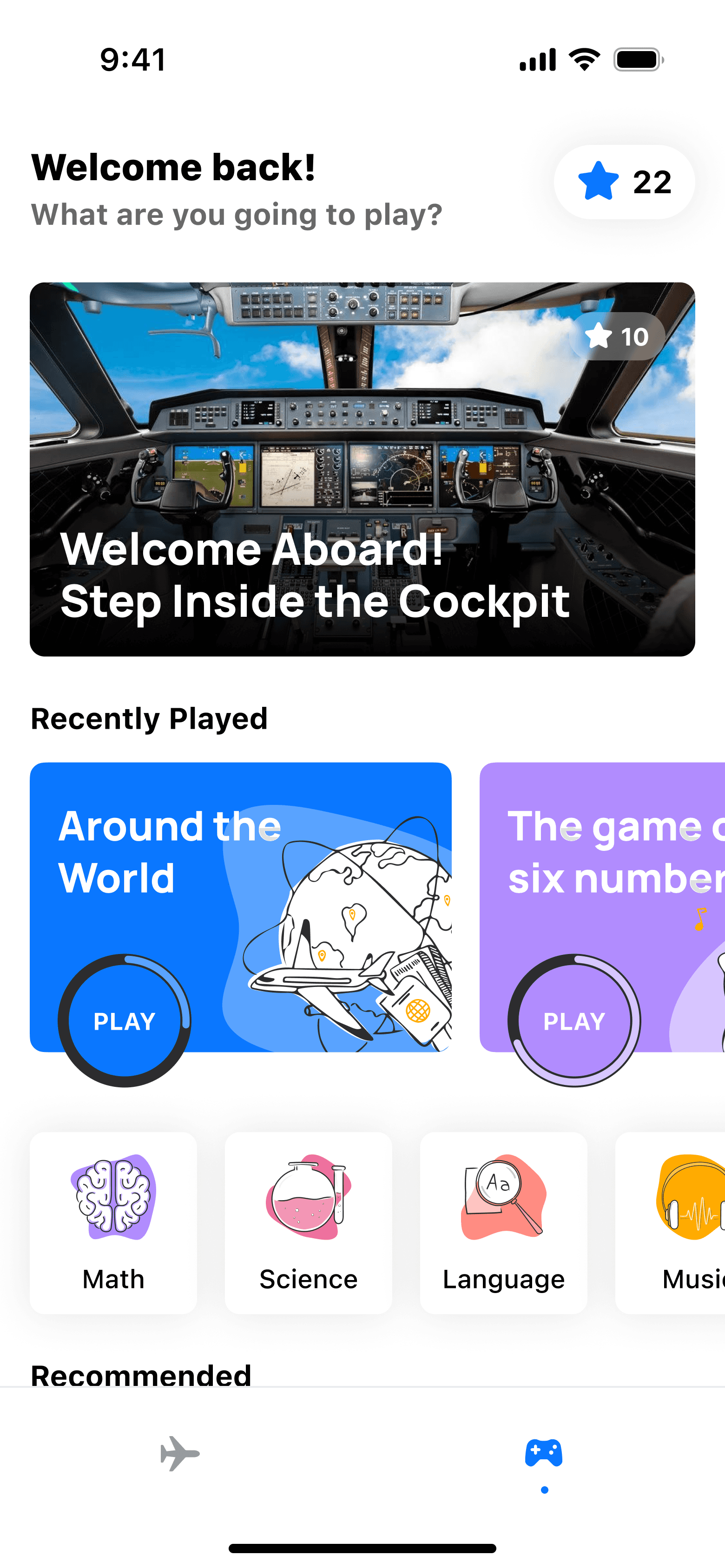
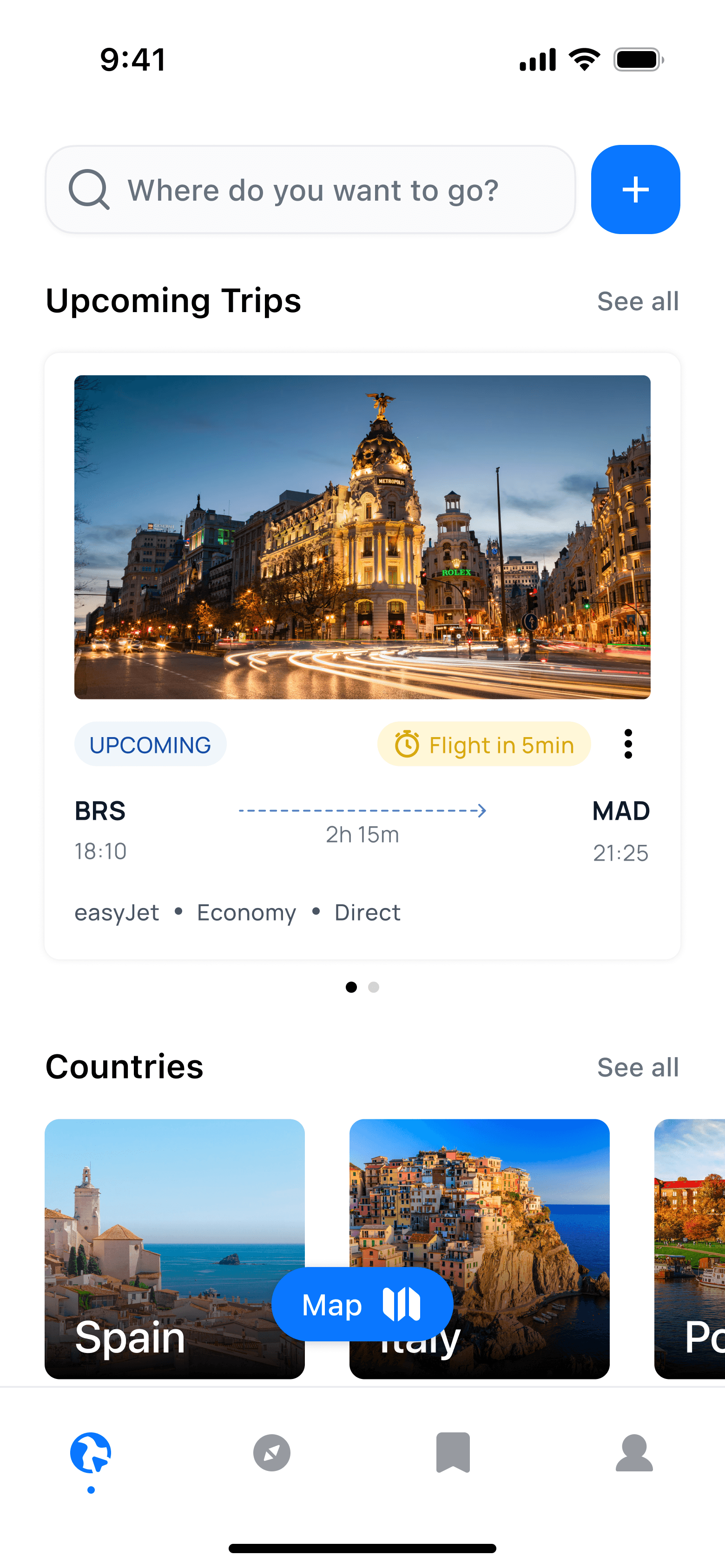
At the heart of Eye-Fly was the idea of an interactive travel companion built around location, curiosity and discovery. The experience explored how users could:
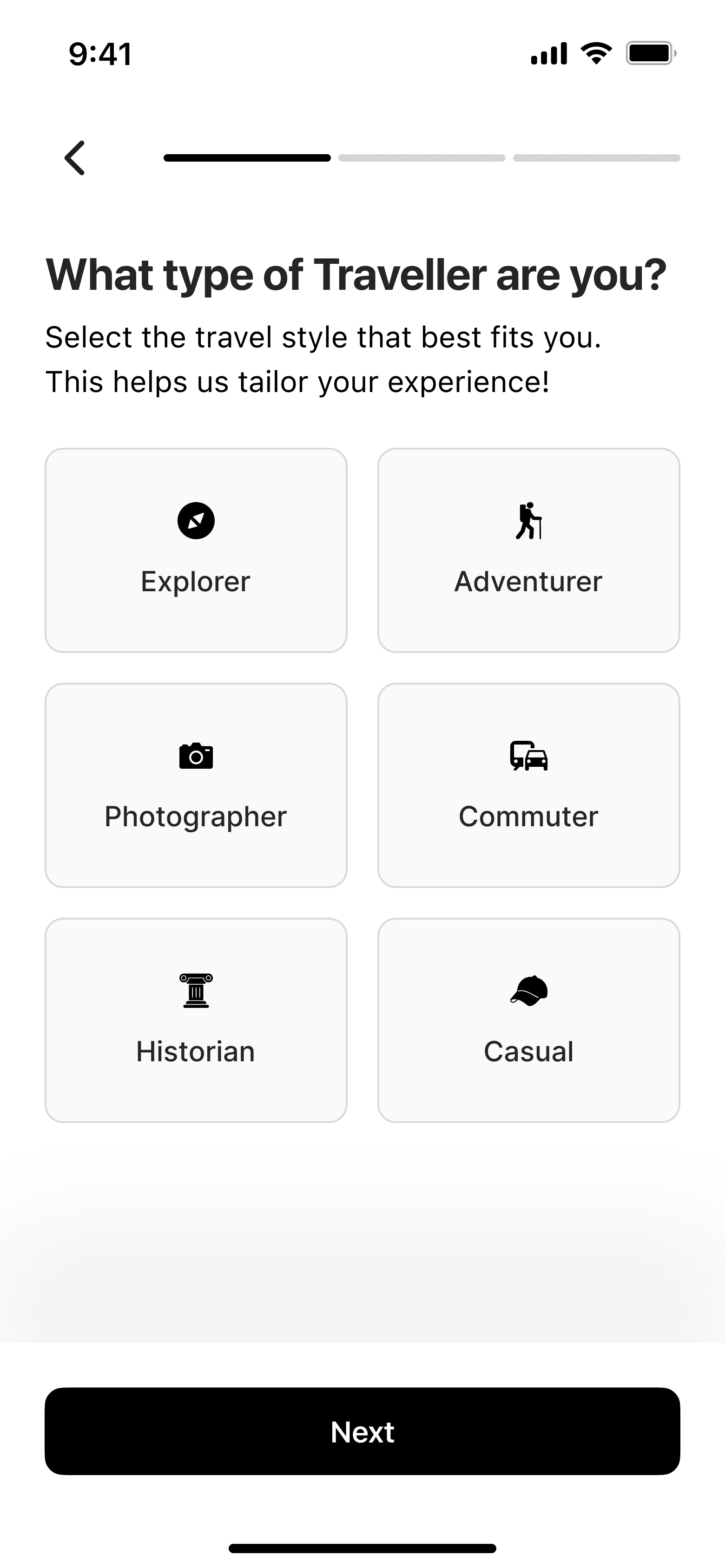
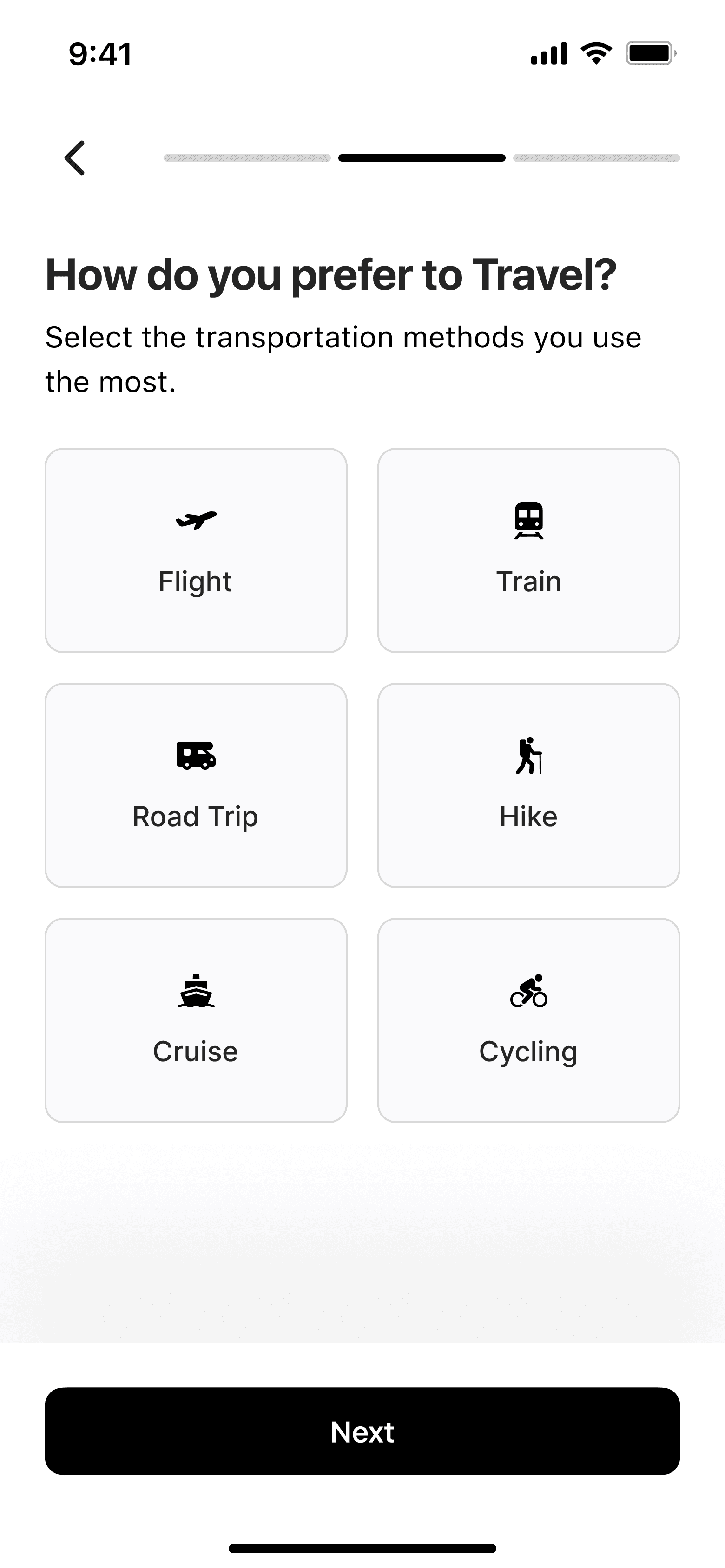
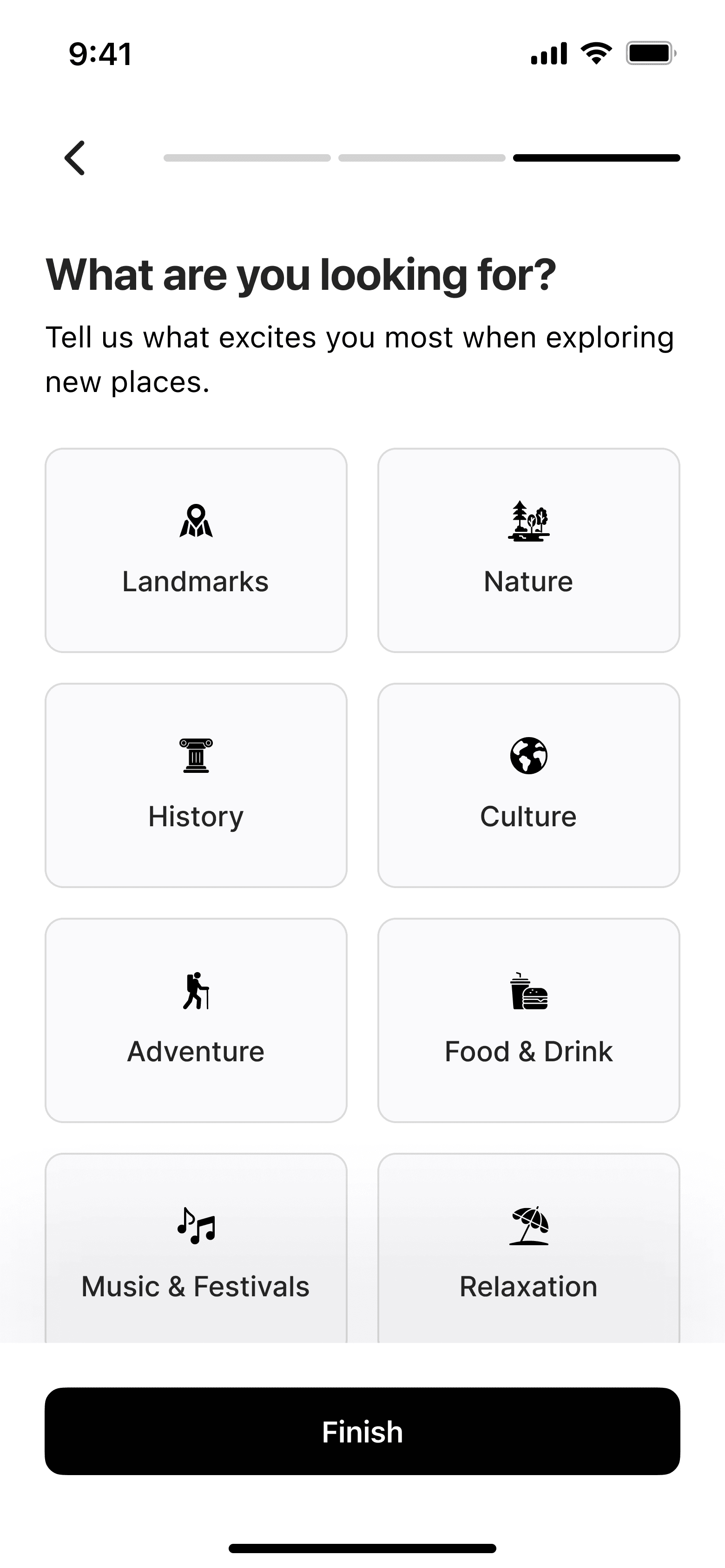
personalise content based on their interests
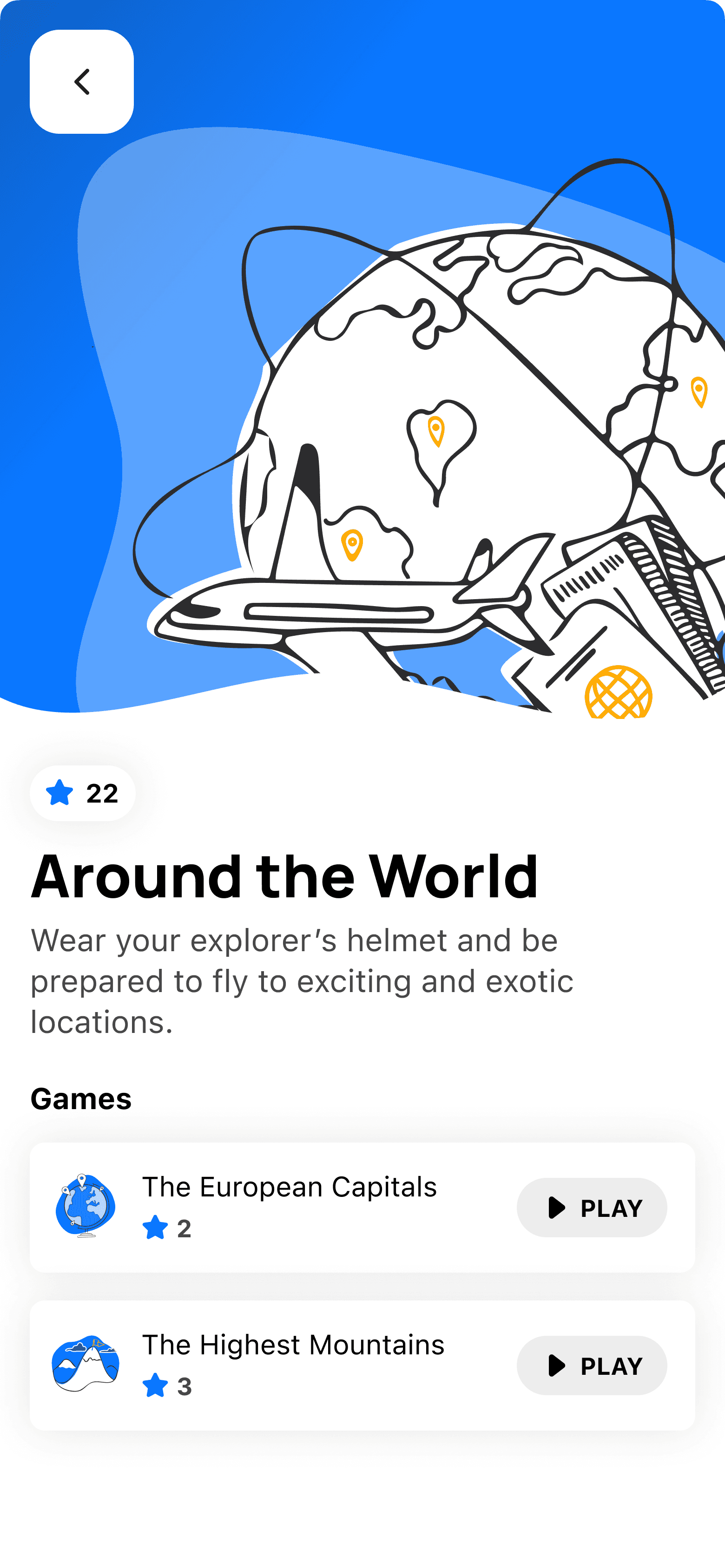
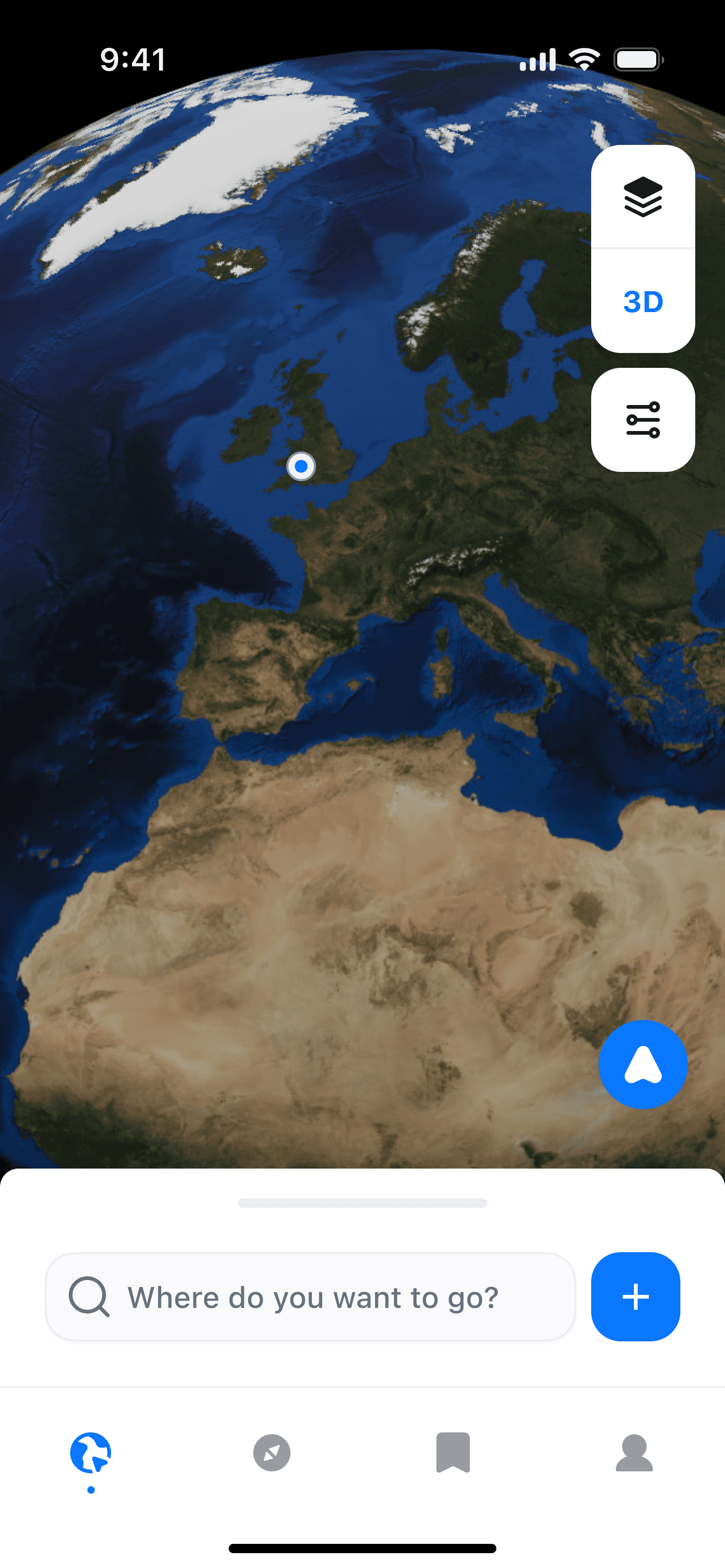
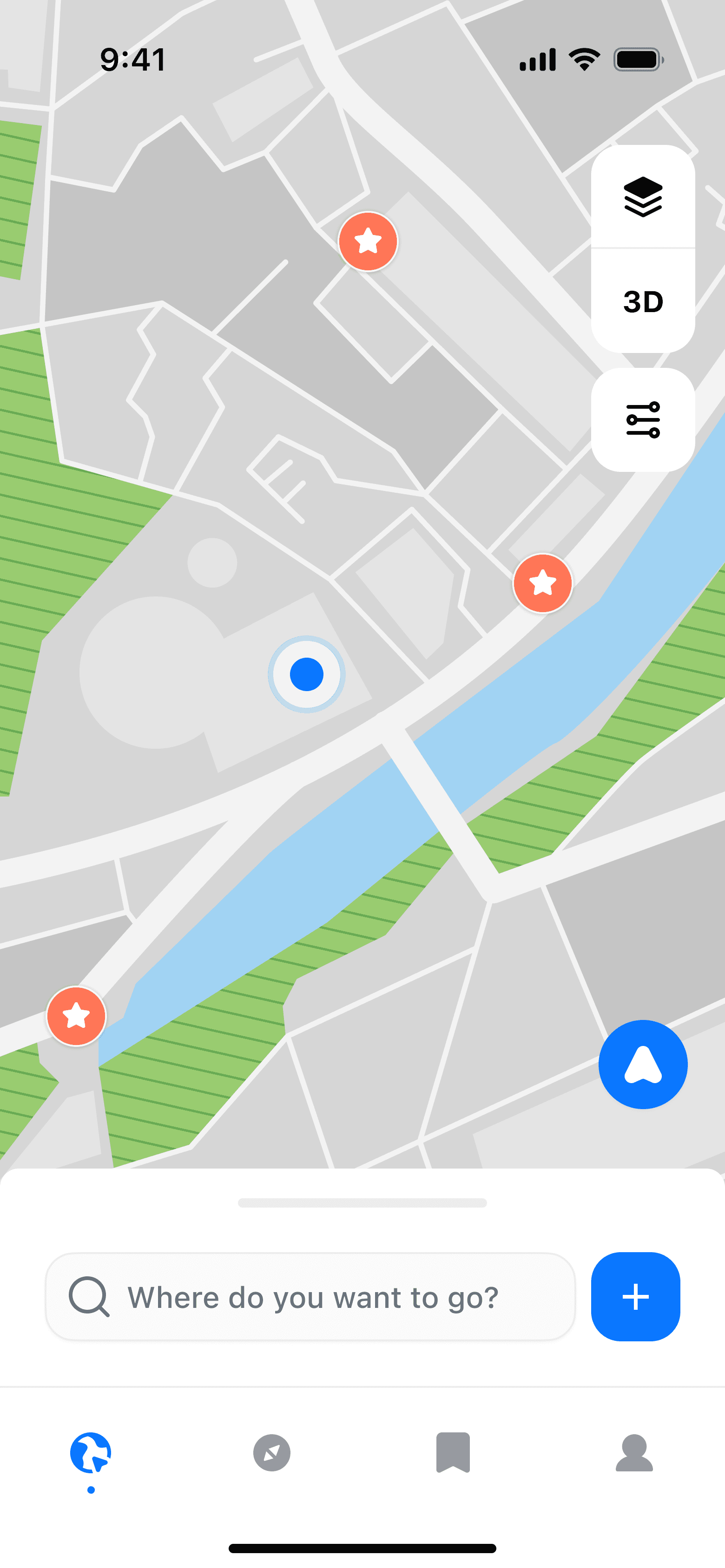
view an interactive map or globe during travel
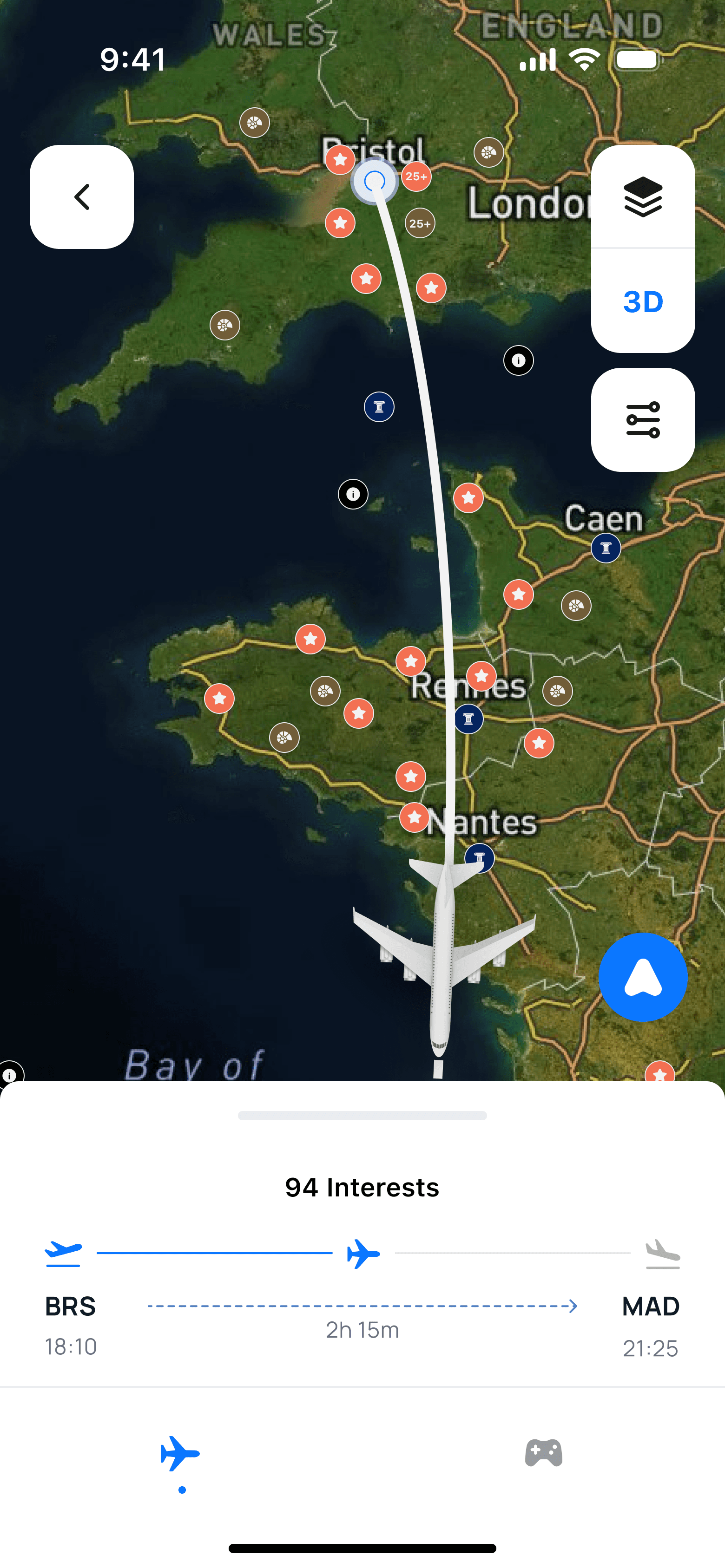
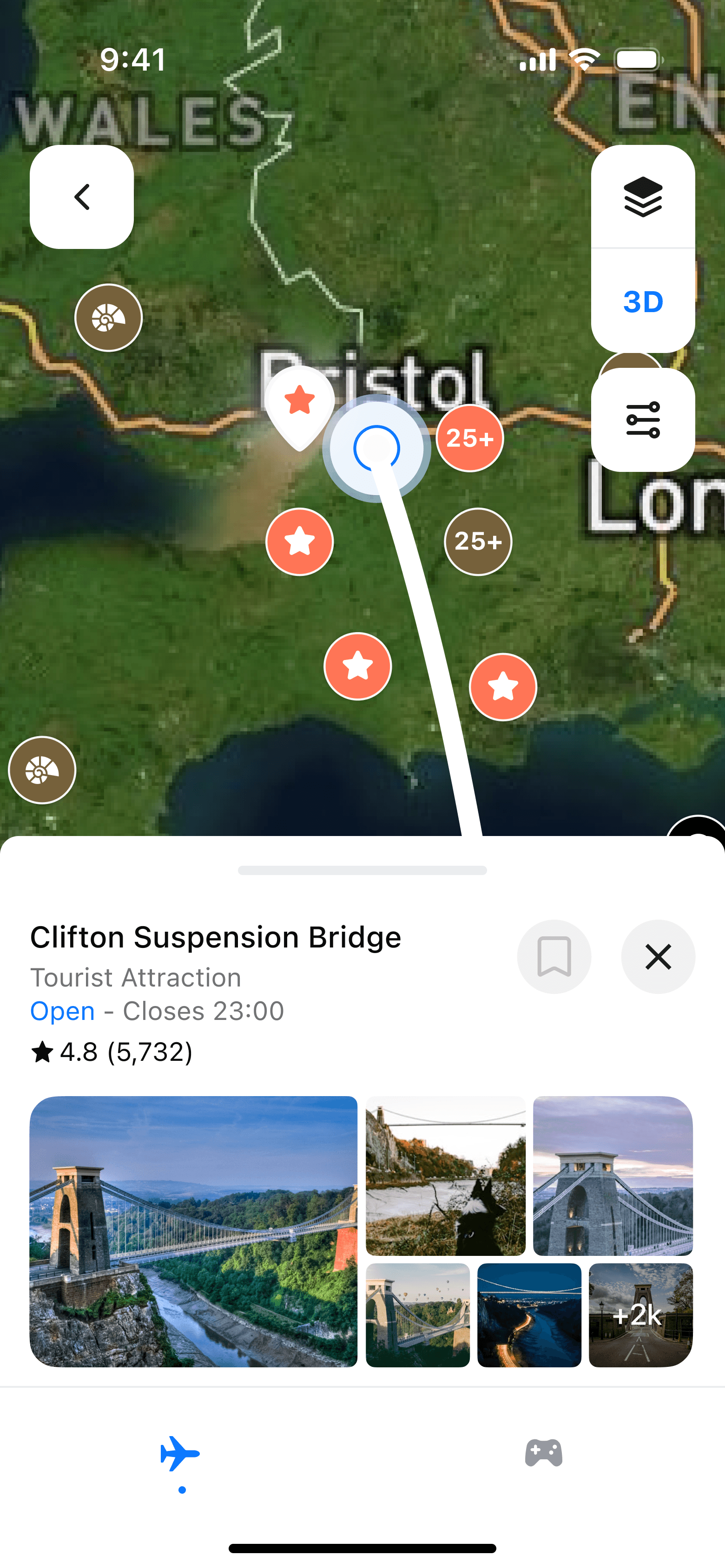
see contextual information about places along their route
save landmarks or destinations for later
build a personal record of journeys and discoveries over time
This created a product concept that felt broader than in-flight entertainment alone. It started to become something closer to a personal travel discovery tool.
A key consideration throughout was that the app needed to work offline while in the air, where Wi-Fi could be limited, inconsistent or unavailable altogether. That meant thinking carefully about what content needed to be preloaded, what functionality had to remain accessible without a connection, and how to make the experience still feel valuable even when fully offline.
From ideas to MVP
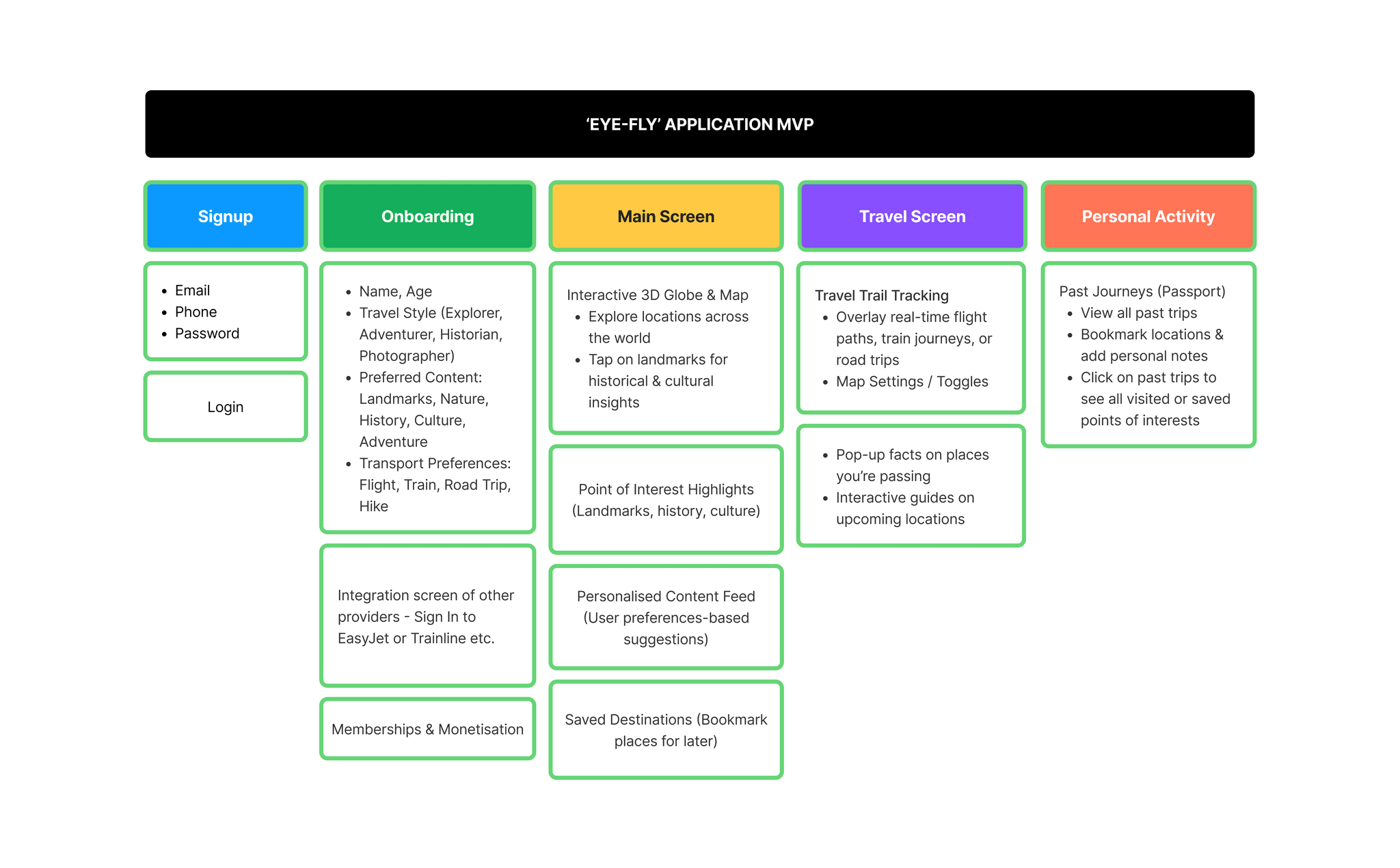
A big part of the work was helping narrow the concept into a more focused MVP.
There were many feature ideas on the table, including gamification, quizzes, AR interactions, educational content, travel journalling, external integrations and personalised route-based recommendations. While these ideas added energy to the concept, not all of them needed to exist in the first version.
The strongest MVP centred around a few essential areas:
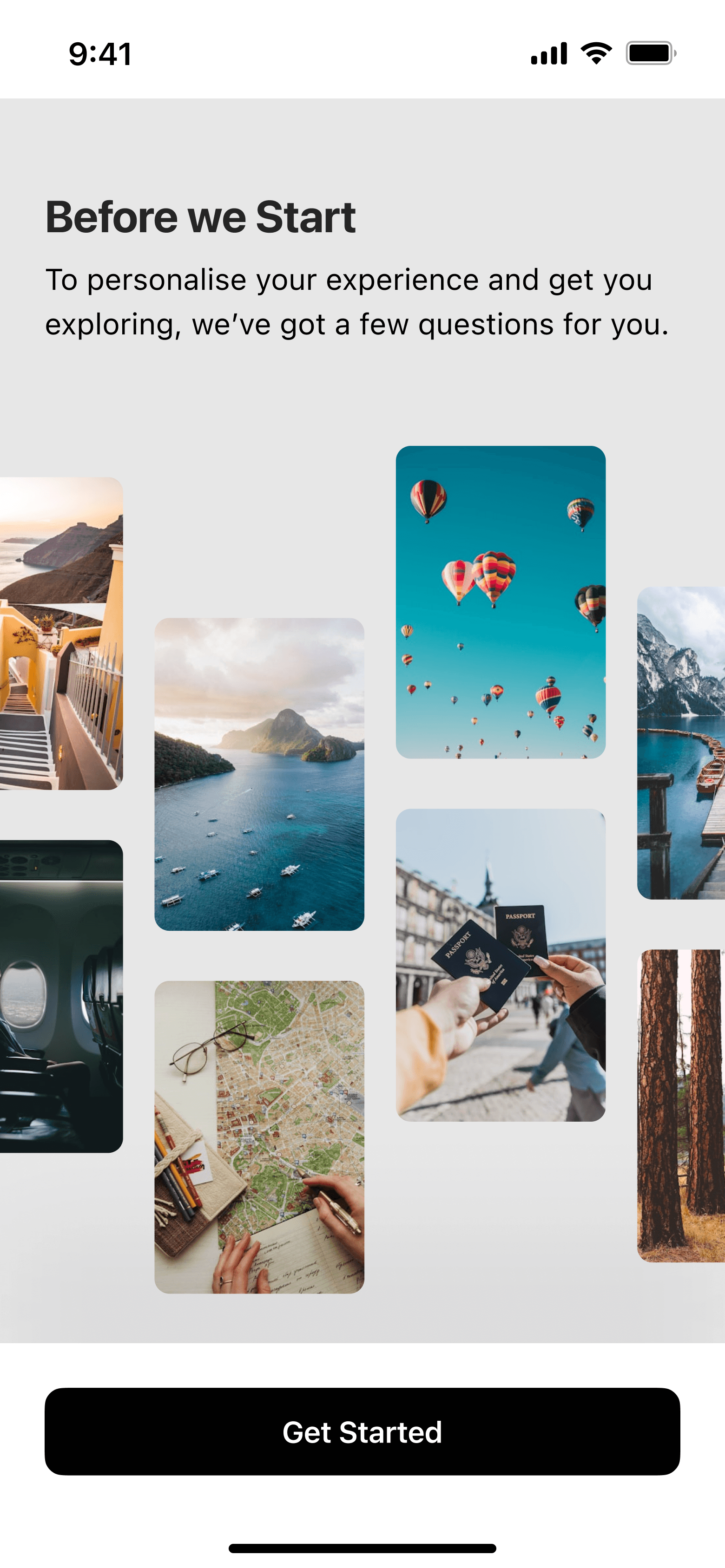
Onboarding
A simple setup flow to understand travel preferences, interests and content types.
Main exploration experience
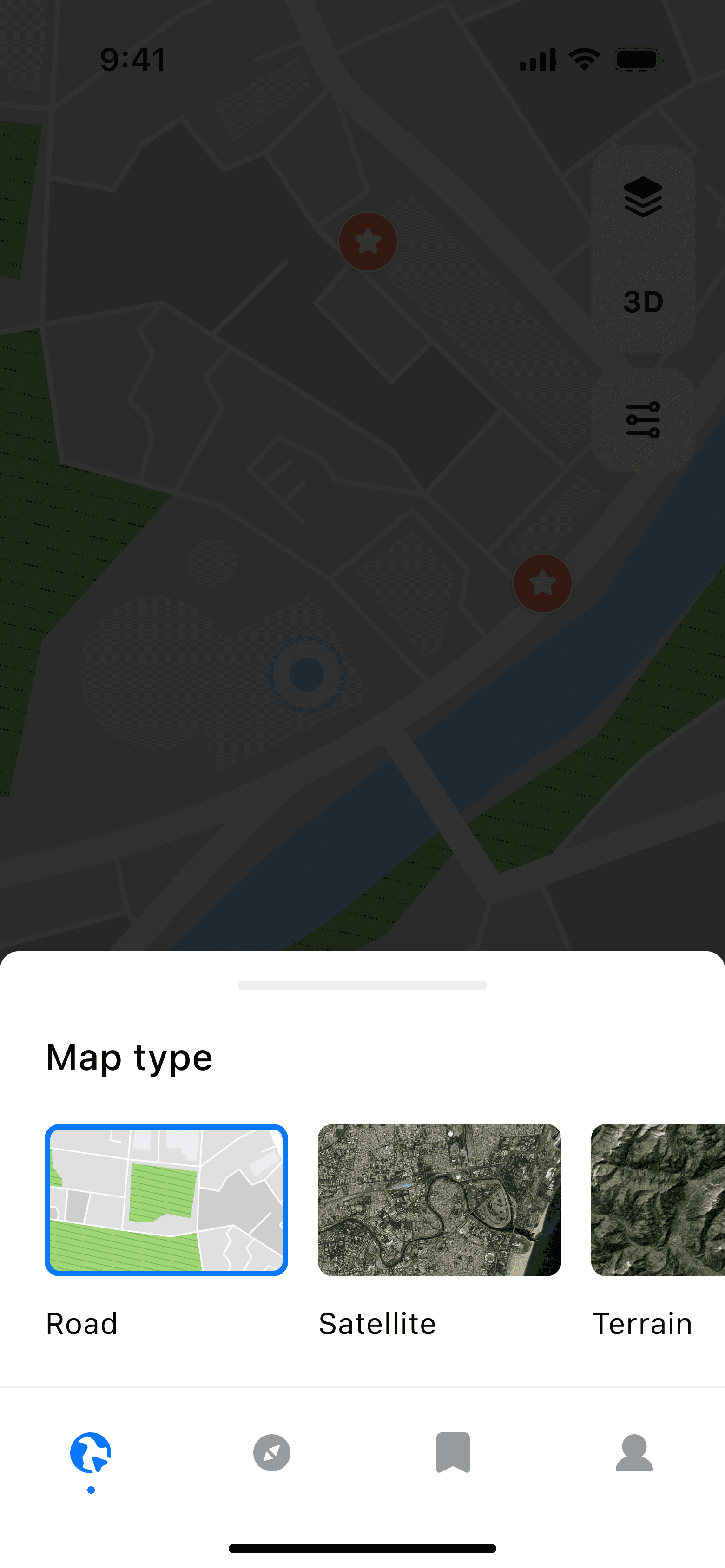
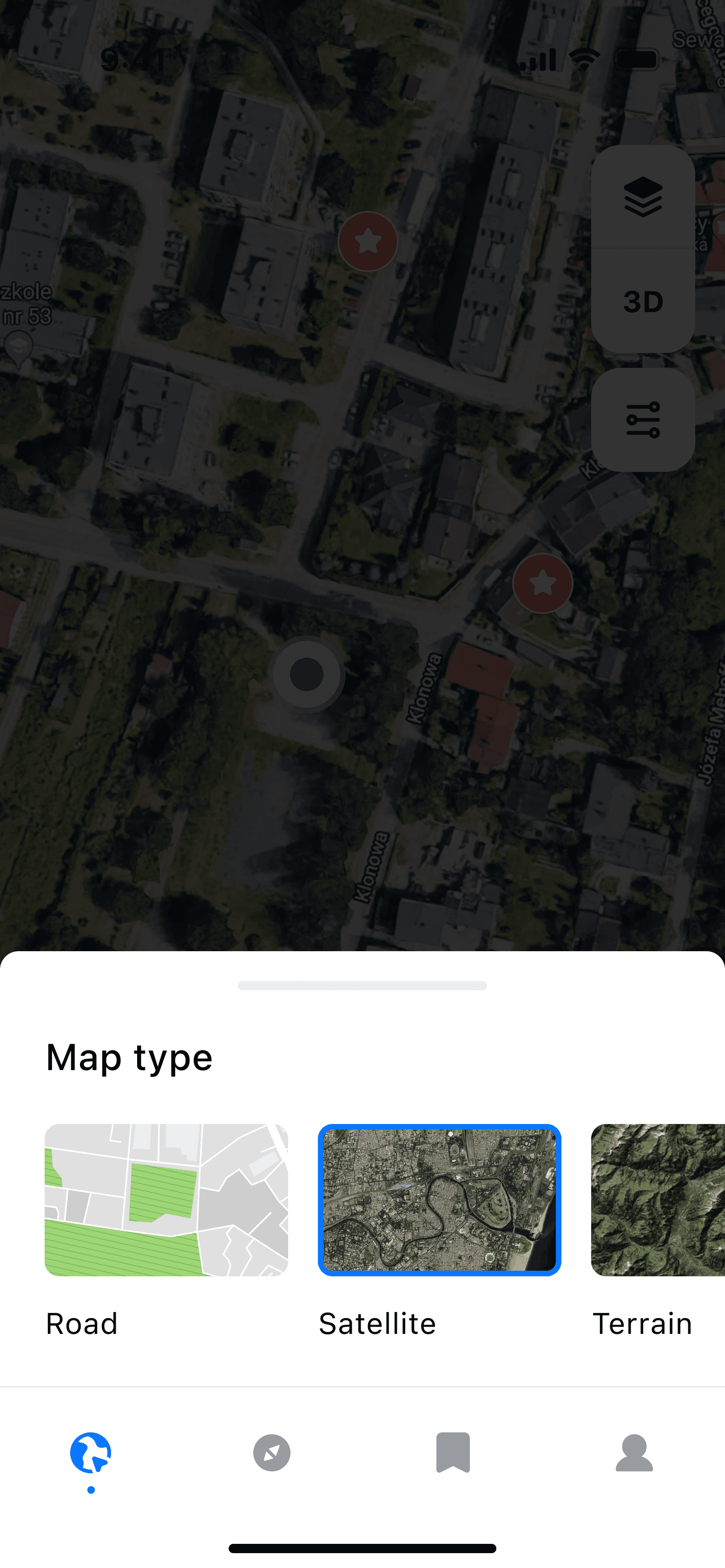
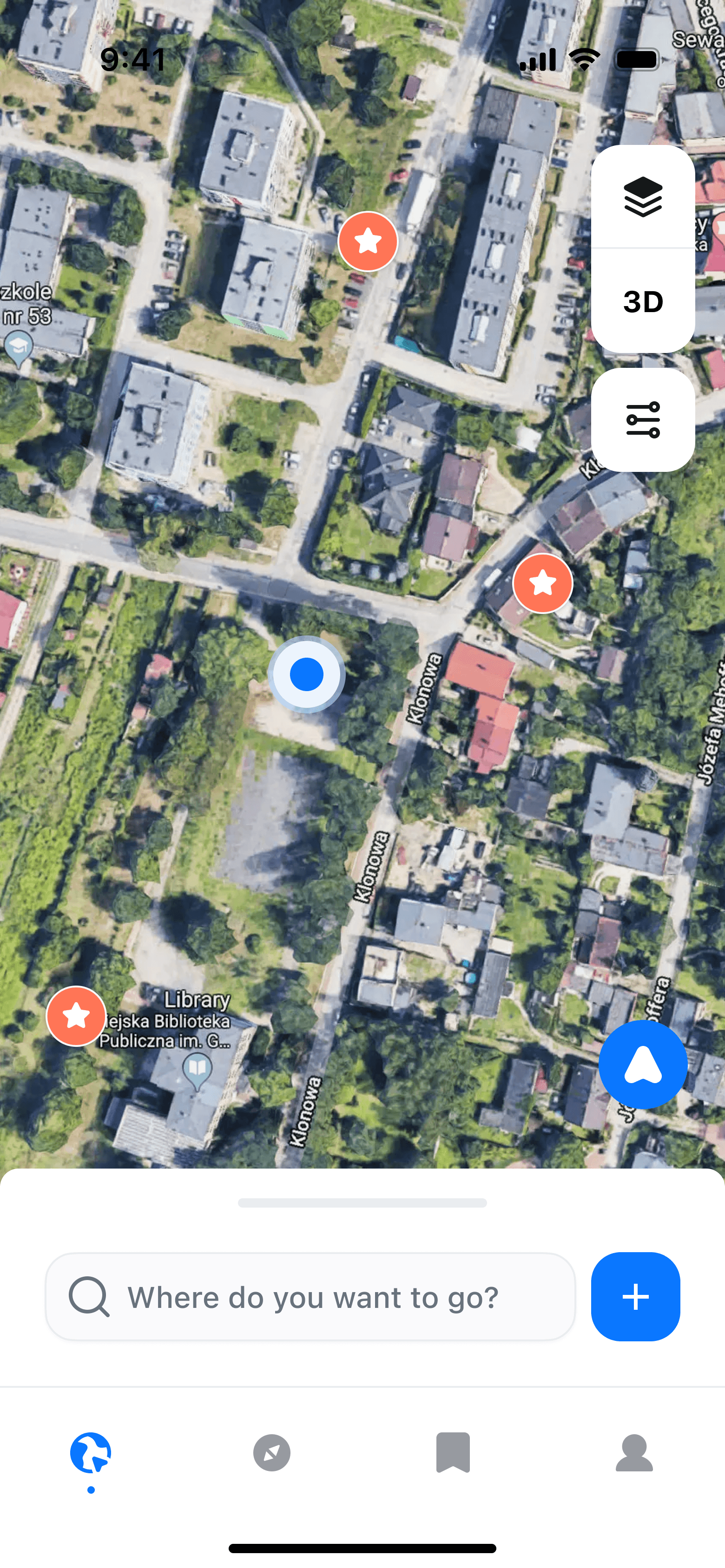
An interactive map or globe where users could explore places and access points of interest.
Travel mode
A journey-focused view that could surface contextual content in real time based on where the user was travelling.
Saved places and personal activity
A way to bookmark interesting locations and revisit them later, turning a moment of curiosity into something more lasting.
What came out of it
What I enjoyed most about this project was the balance between imagination and structure.
The idea itself invited a lot of creative thinking, but the UX challenge was making sure it stayed grounded. It needed to feel useful, not gimmicky. Inspiring, but still intuitive. Rich in content, but not overwhelming.
A lot of the work was about deciding what to prioritise, how to reduce complexity, and how to shape something that could work for different user needs without losing clarity.
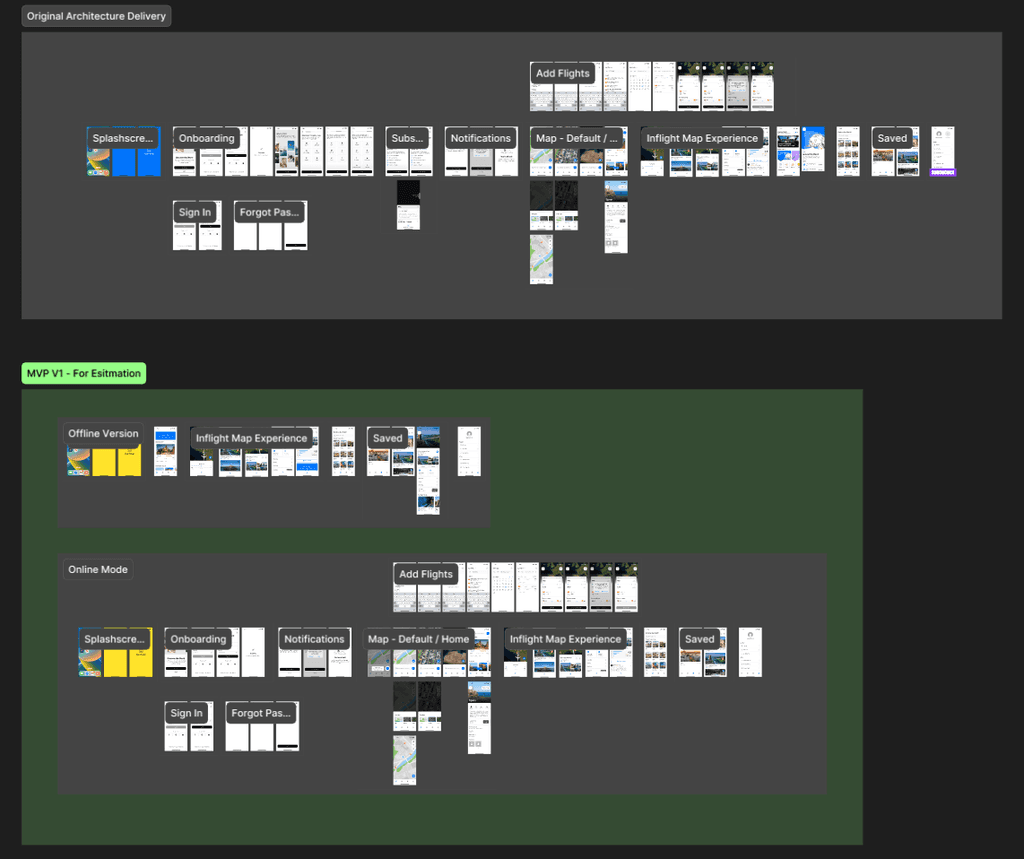
Prototypes
Outcomes
Personalised Experiences
Map Settings
Trip Management
Gamification