My Role
Lead UX Designer
Timeline
6 weeks (2024)
Industry
Event Tech / Sales Tech
Platform
Web Platform

Overview
Pathfinder was a platform concept designed to help teams manage event outreach more effectively before, during and after conferences. When I joined the project, some initial thinking and flows had already been created by the client, but the product needed clearer UX structure, stronger user-centred thinking, and a better understanding of how the platform should actually work.
Working as a UX Designer within an agency team, I had a short six-week window to get up to speed quickly, understand the existing work, and bring more clarity to the experience through discovery, user flows, personas and information architecture.
The challenge
Pathfinder set out to solve a genuine business problem:
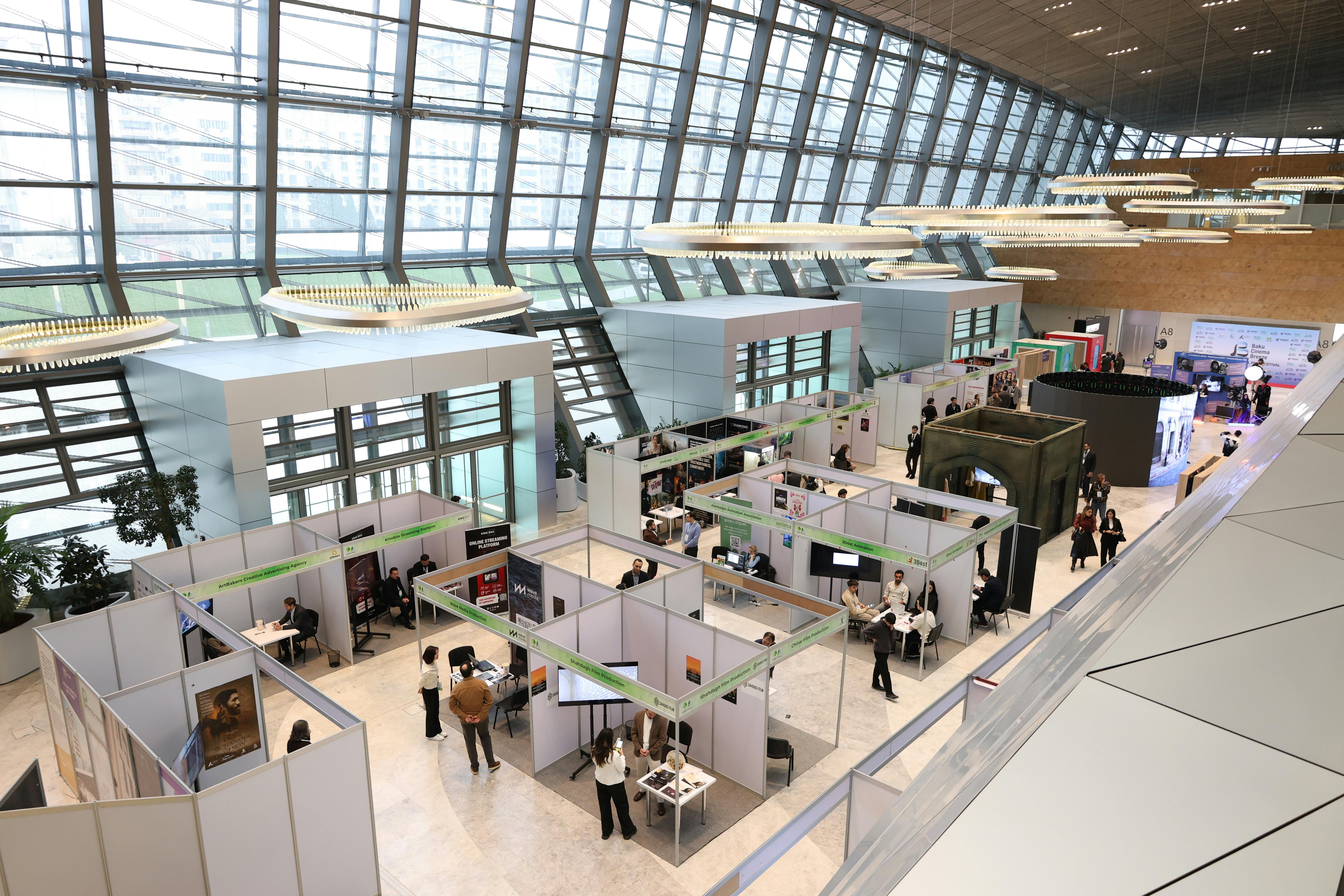
Companies invest heavily in events, but much of the outreach, follow-up and lead management around them is still highly manual. Delegate lists are large, data is often incomplete, and teams spend too much time trying to identify relevant people, coordinate meetings and follow up consistently afterwards.
The bigger challenge for me was that the platform had already started taking shape before I got involved. Rather than beginning with a blank page, I had to quickly understand the client’s existing flows, assumptions and ambitions, then work out where the gaps were and how to bring more structure to the product.
My Role
As the UX Designer on the project, my role was to help turn early product thinking into something more coherent and usable.
Over a 1 week discovery phase, I focused on:
understanding the existing platform thinking and journeys
reviewing the flows already created by the client
identifying UX gaps and unclear logic
mapping clearer user flow diagrams
creating personas for key user groups
structuring the information architecture
helping define what a more realistic first phase of the product could look like
Because of the agency setting and working towards a certain budget, the pace was quick. The work had to be collaborative, focused and practical, with progress happening in short sprints rather than long phases.
Workshop and discovery
A big part of the process was discovery: understanding the project, the people it served, the processes behind it and the data it depended on. The discovery phase outlined a number of key activities, including project requirements, persona mapping, information architecture, core user and system flows, technical scoping and integration exploration.
This was important because the product had multiple moving parts. It was not just one simple user journey. Pathfinder had to support a wider event outreach process involving sponsors, marketing teams, sales teams, internal admins and event-related workflows before and after the event itself.
The discovery work also highlighted several unknowns, such as the exact event execution process, how the dashboard should work, how onboarding should feel and how the product might scale over time.
Understanding the Users
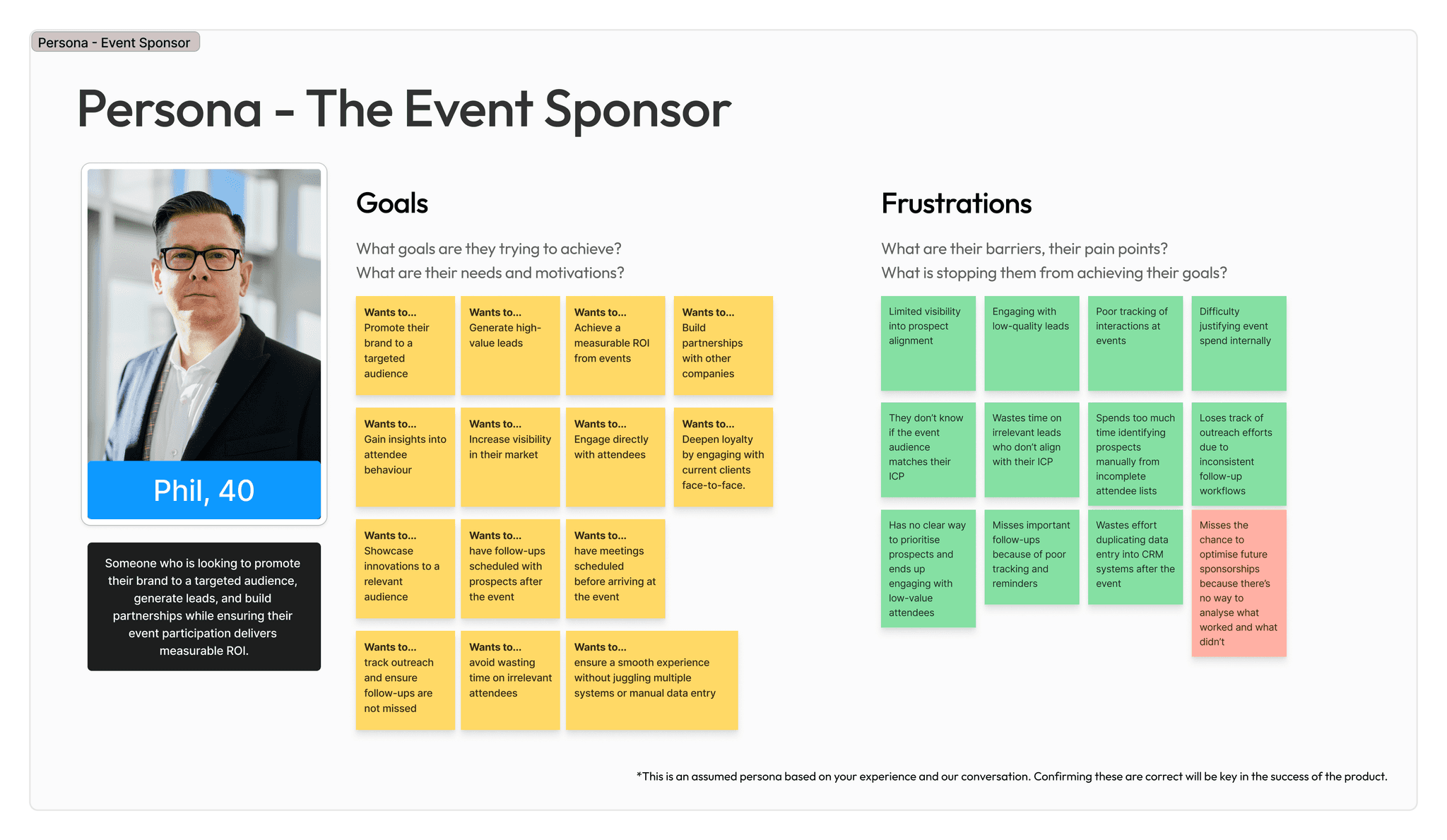
To help ground the product in real user needs, I worked on defining a clearer set of personas. The project material pointed to several different user groups, but three especially important ones stood out:
This was important because the product had multiple moving parts. It was not just one simple user journey. Pathfinder had to support a wider event outreach process involving sponsors, marketing teams, sales teams, internal admins and event-related workflows before and after the event itself.
The discovery work also highlighted several unknowns, such as the exact event execution process, how the dashboard should work, how onboarding should feel and how the product might scale over time.
Event Sponsor
A user focused on promoting their brand, generating high-value leads, building partnerships and proving event ROI. Their frustrations included poor visibility into which prospects were actually relevant, too much manual prospect filtering and inconsistent follow-up.
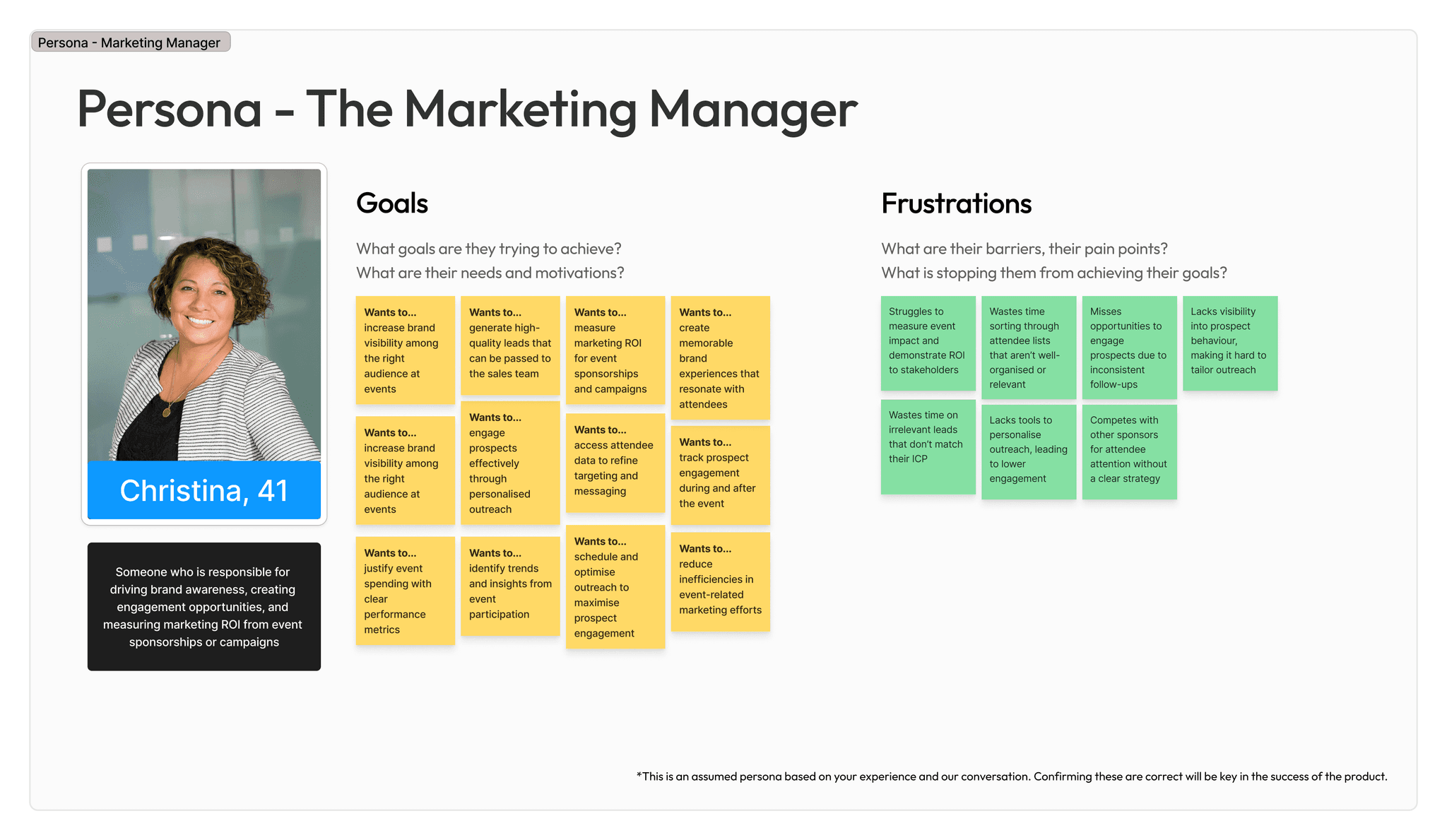
Marketing Manager
A user focused on visibility, campaign performance and proving the value of event activity. Their needs centred on better targeting, stronger insight into prospect behaviour and clearer ROI tracking.
Sales Team
A user focused on identifying strong leads, prioritising prospects, booking meetings and following up effectively. Their frustrations included incomplete attendee data, time wasted on low-priority prospects and poor post-event tracking.
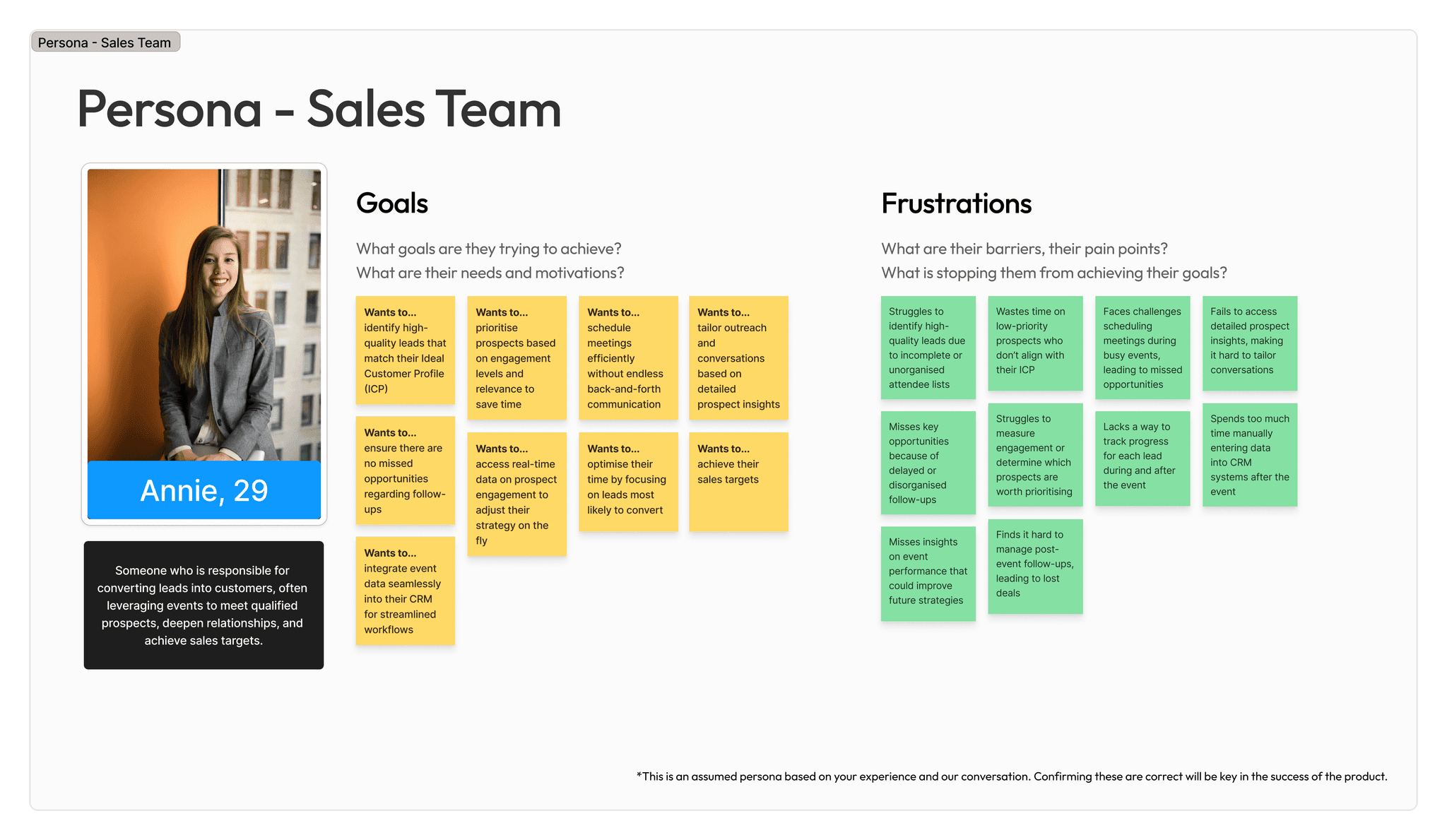
Creating personas helped move the project away from generic platform thinking and towards clearer use cases, goals and pain points.
Design process
My design process on Pathfinder was largely about turning ambiguity into structure. The project already had momentum, but the UX needed stronger definition to support what the platform was trying to do.
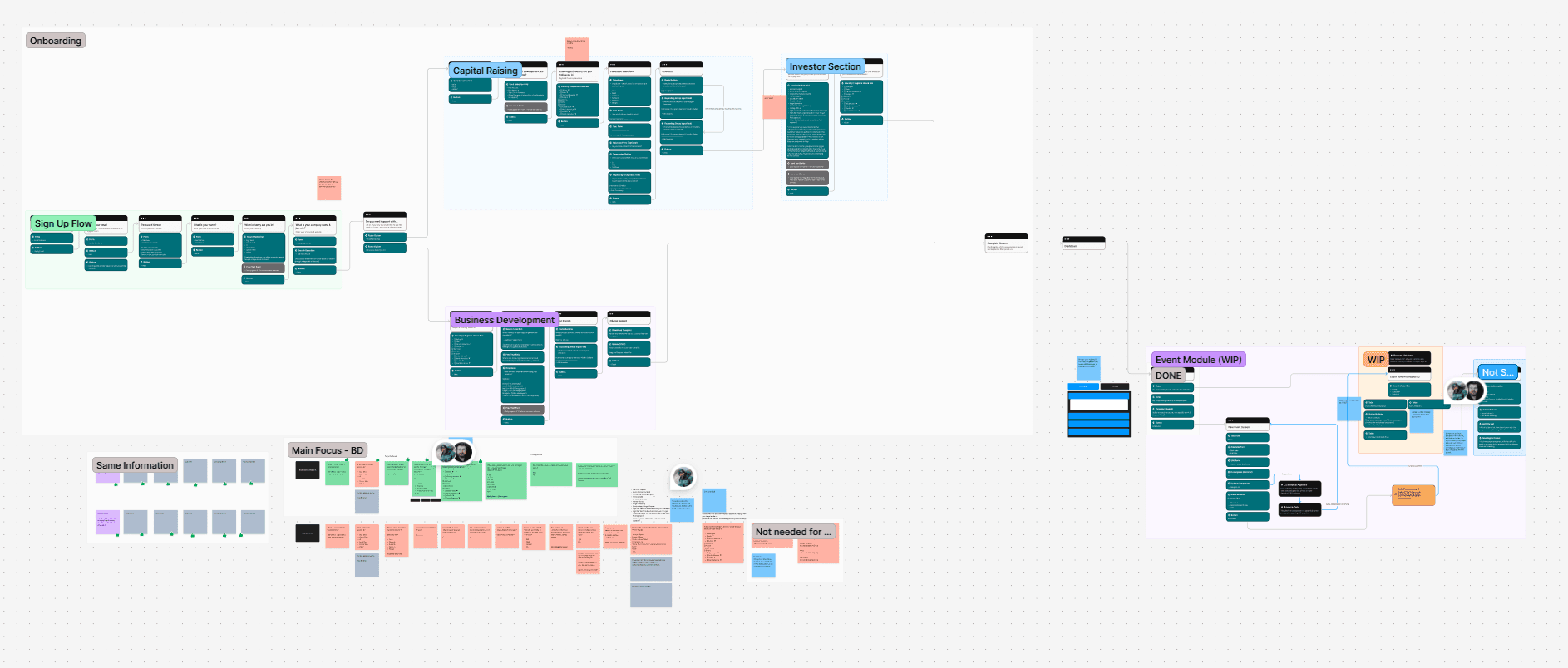
I started by reviewing the current flows and platform thinking, then worked through the product from a more user-centred angle. That meant understanding where the journeys felt unclear, what assumptions had already been made, and what needed to be mapped properly before anything else could progress. From there, I focused on clarifying users, building personas, mapping user journeys and identifying the flows most fundamental to the platform.
Mapping user flow diagrams was important because the product touched a lot of moments in one connected process:
defining target audiences
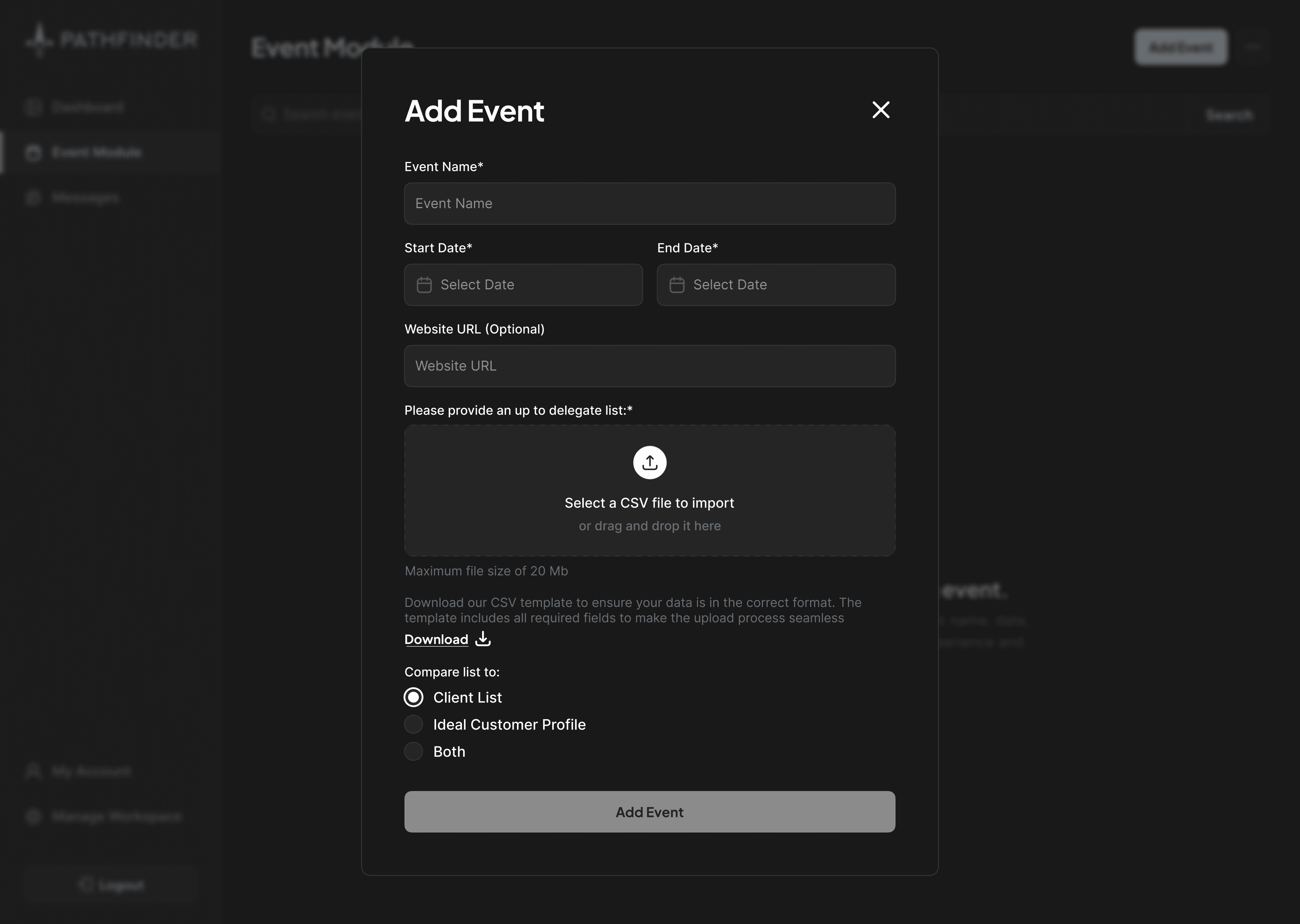
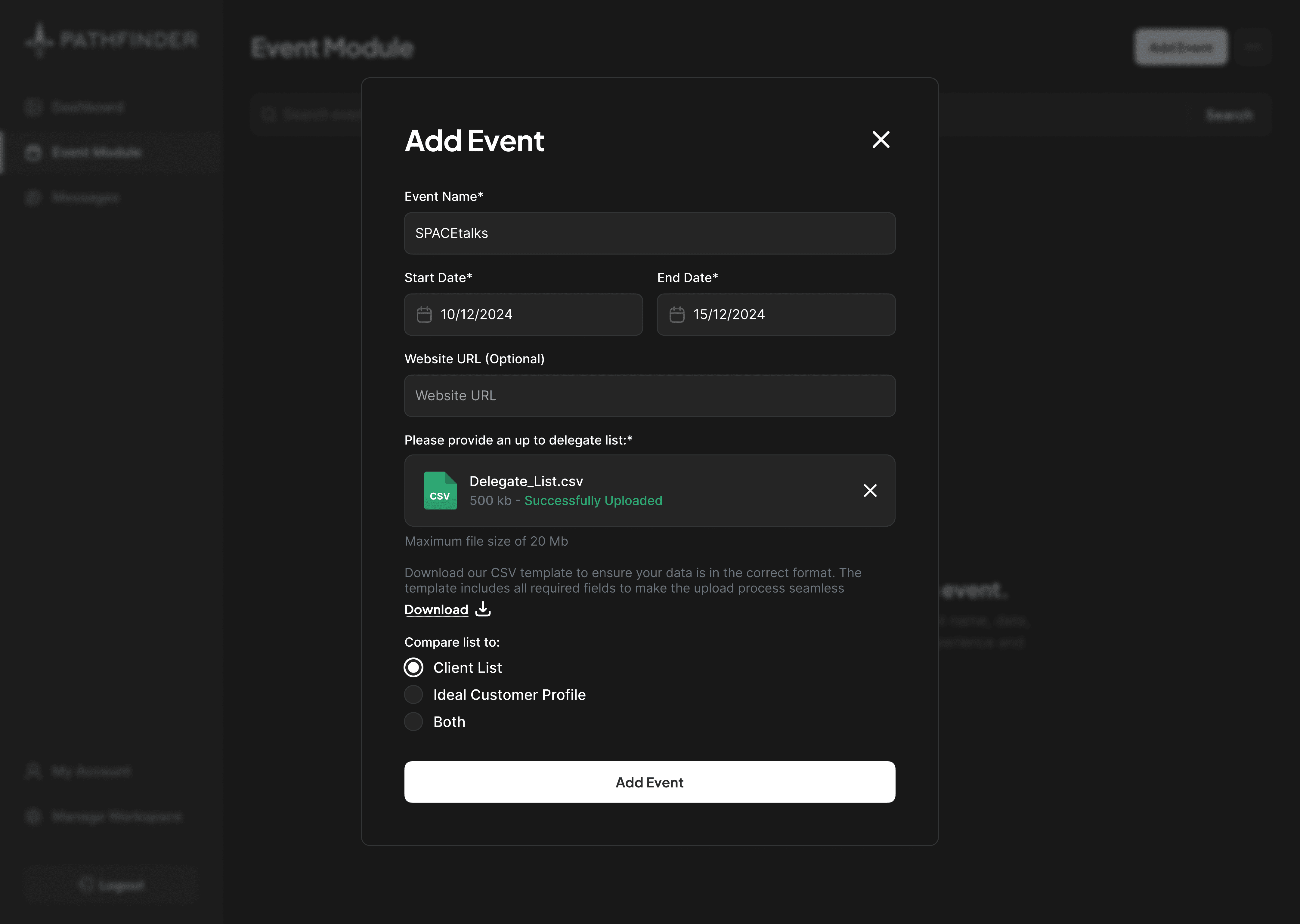
uploading or accessing event lists
identifying relevant prospects
segmenting attendees
automating contact and scheduling
tracking engagement and follow-up
reviewing outcomes and ROI over time
Information architecture
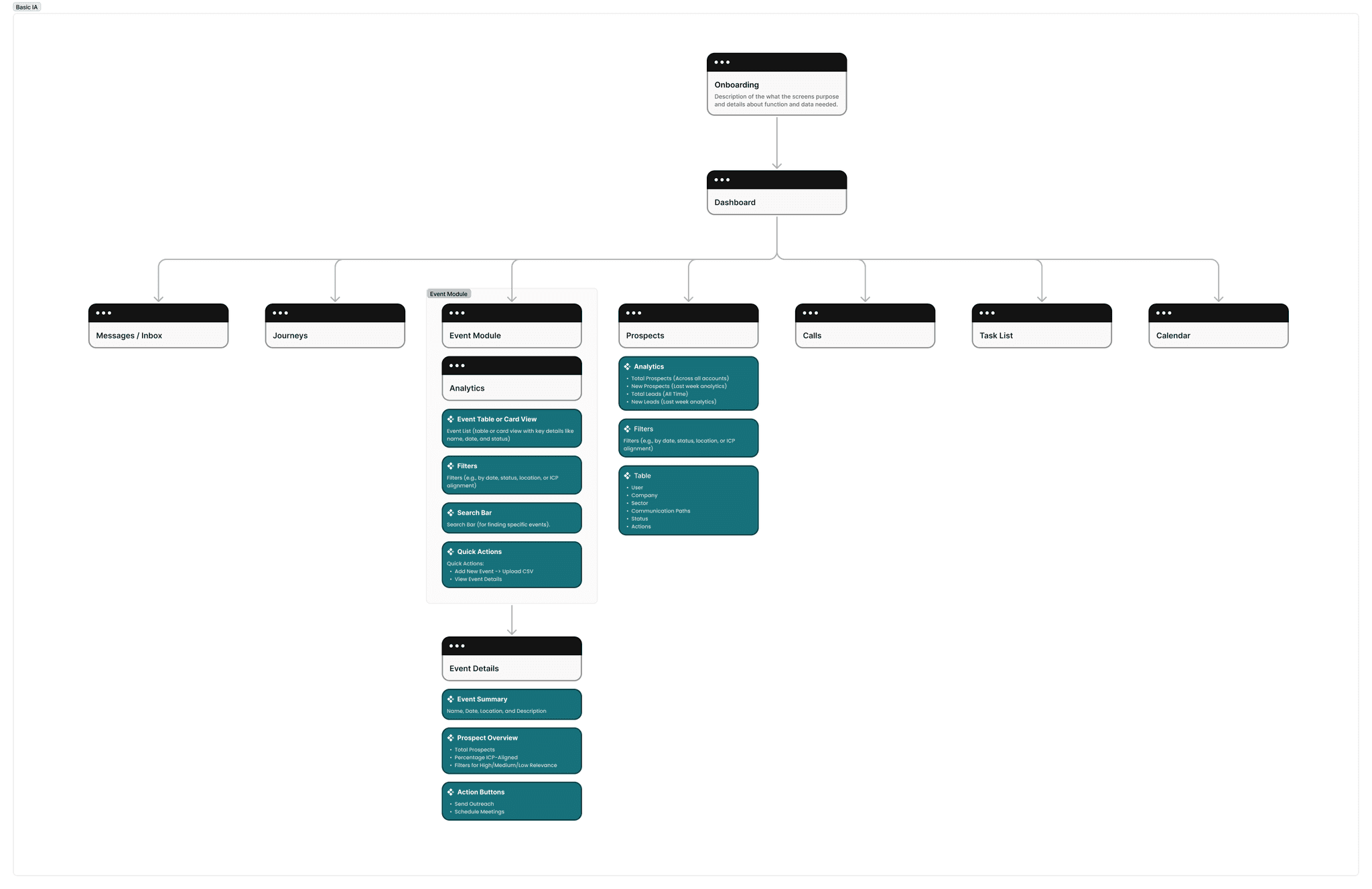
Once the core purpose of the platform became clearer, I worked on the information architecture to bring more structure to the product. Pathfinder covered a wide range of functions, onboarding, event management, attendee handling, outreach, follow-up, scheduling, prospect qualification, integrations and reporting, so the challenge was making sure the platform felt organised rather than overwhelming.
The information architecture work helped define what the main areas of the platform were, what data and actions belonged in each area, and how those pieces connected. It also helped clarify what the user actually needed to see at each stage, where the existing structure was weak, and what needed to be prioritised for an MVP or first phase.
Outcome
By the end of the six weeks, Pathfinder had a much clearer UX foundation than when I first joined the project.
What started as a platform with some early flows and ideas in place became a more structured product direction, supported by clearer user journeys, defined personas and stronger information architecture. For me, the value of the project was in helping the team move from scattered thinking to something more coherent, grounded and ready to evolve further.
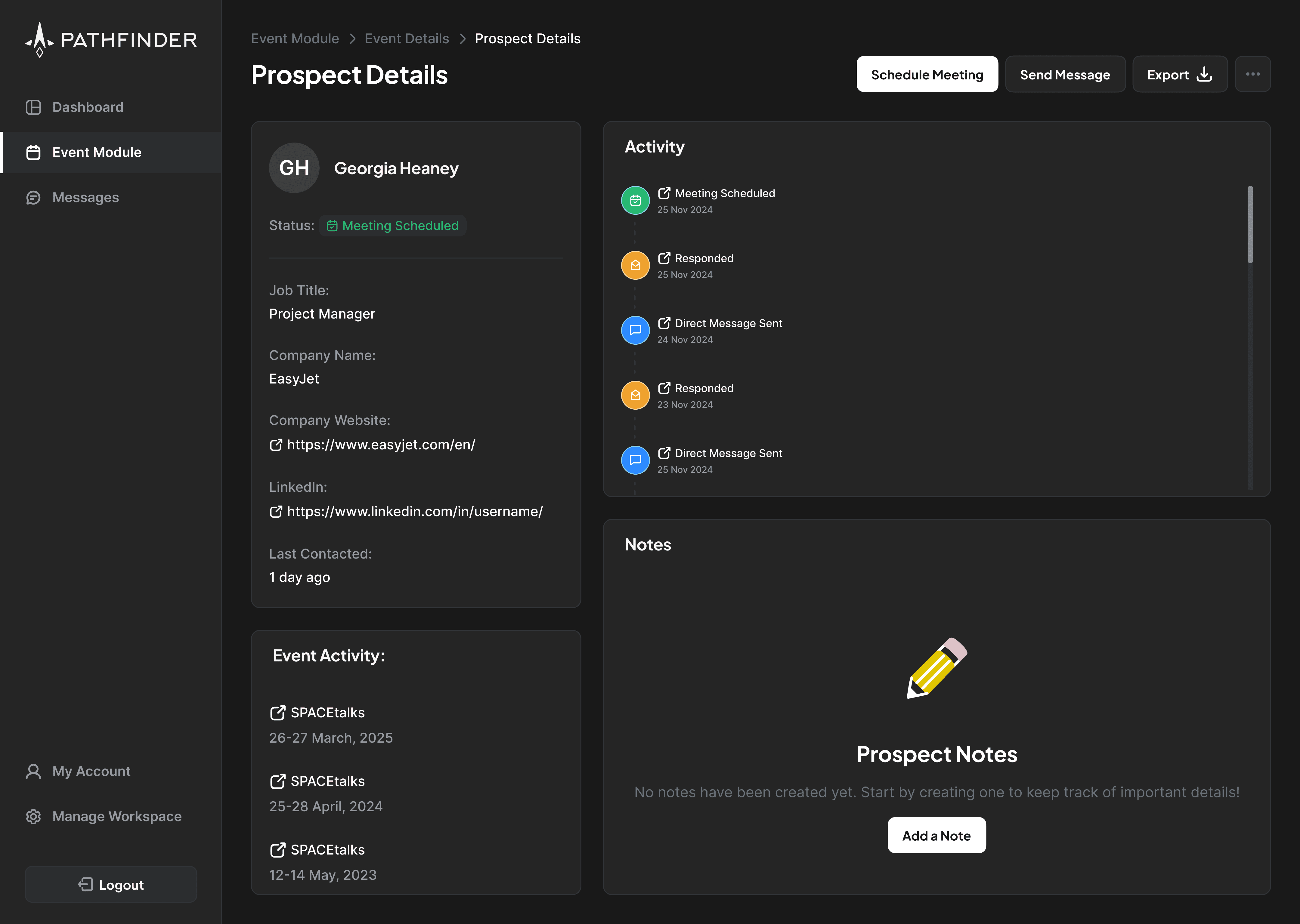
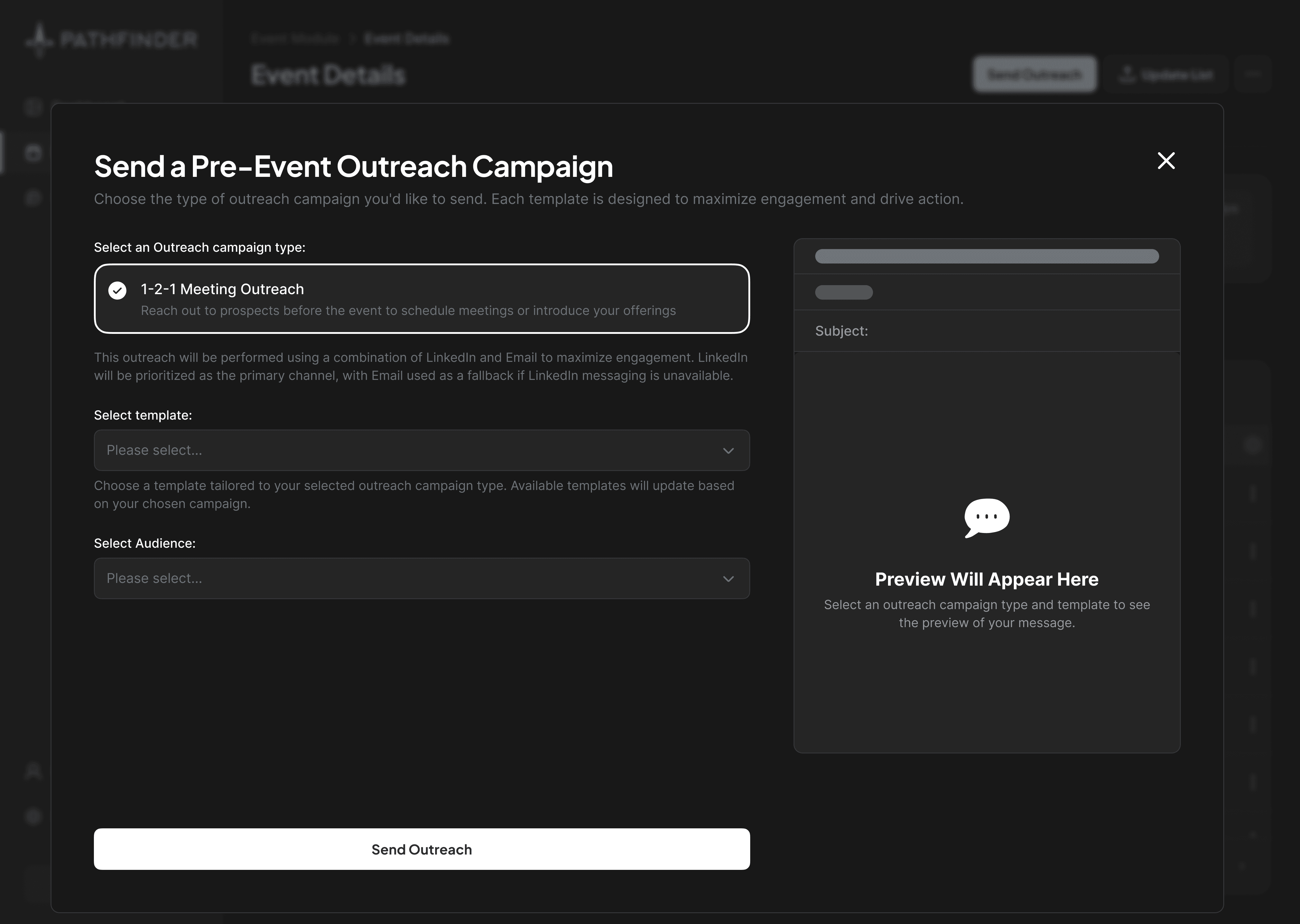
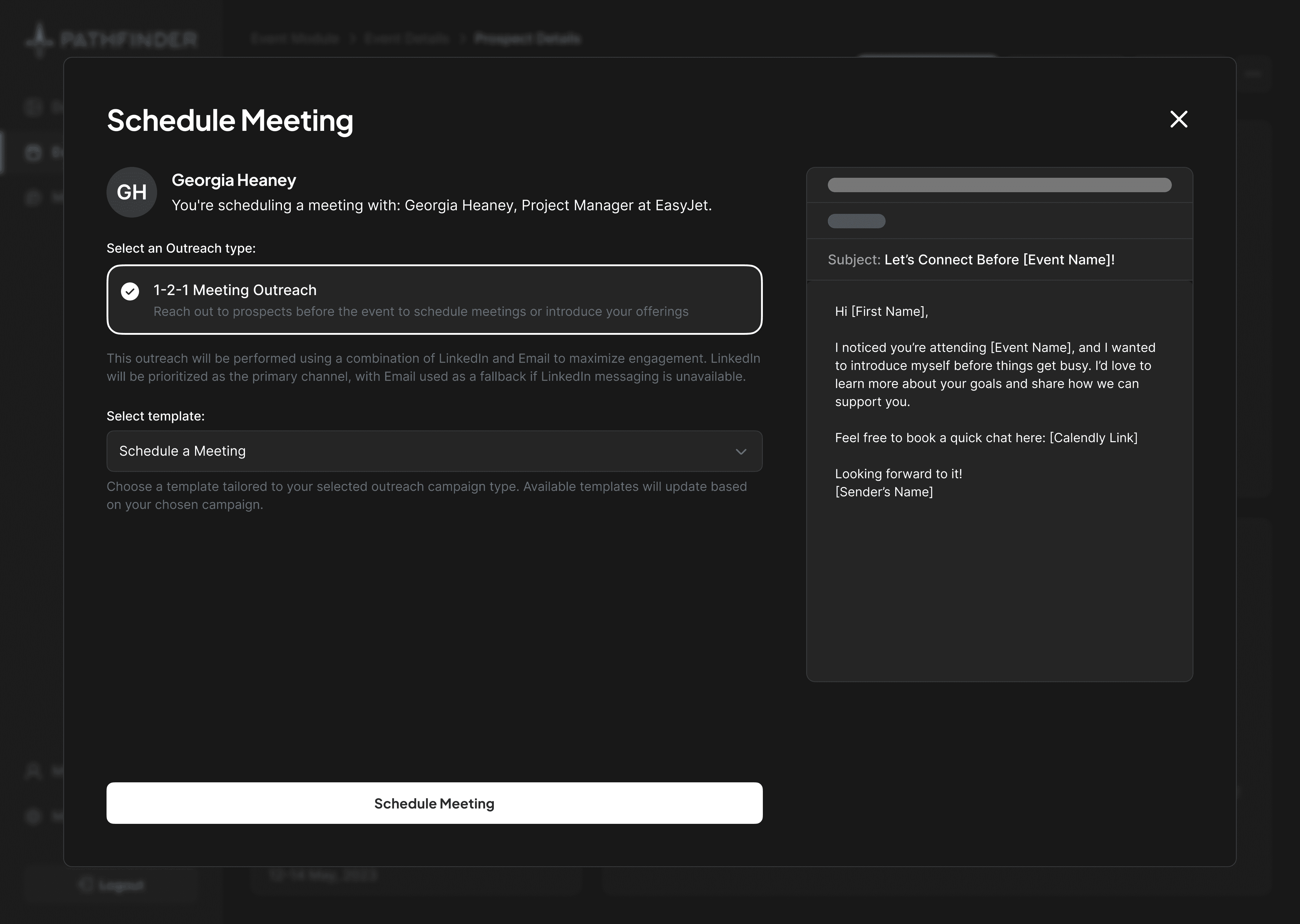
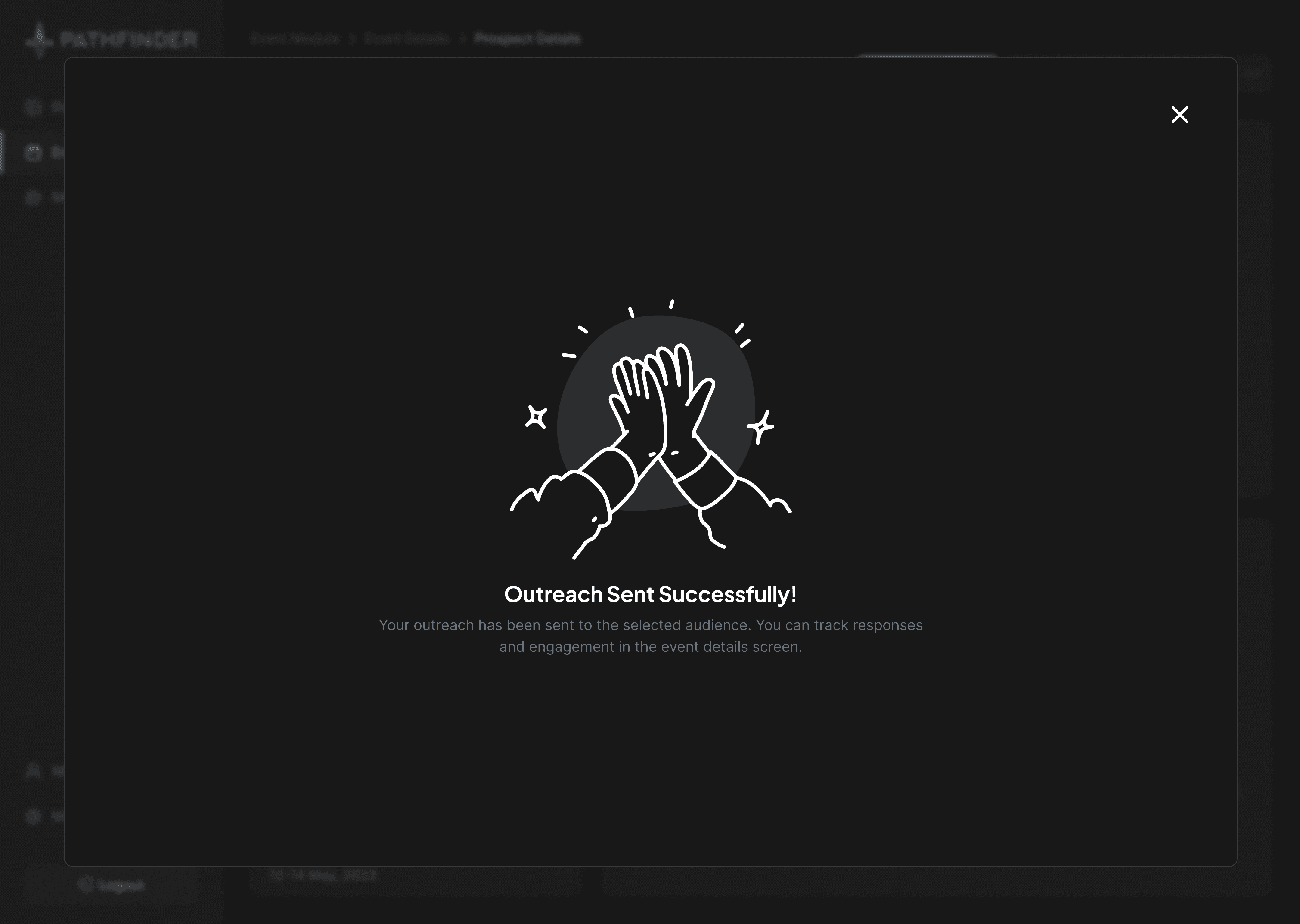
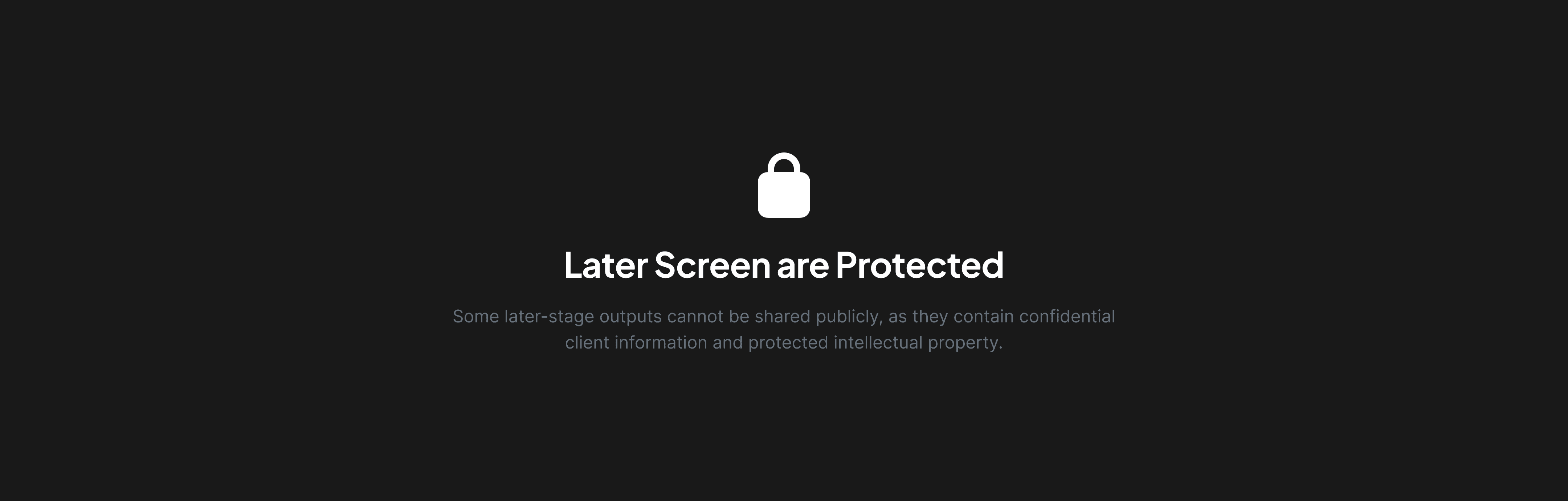
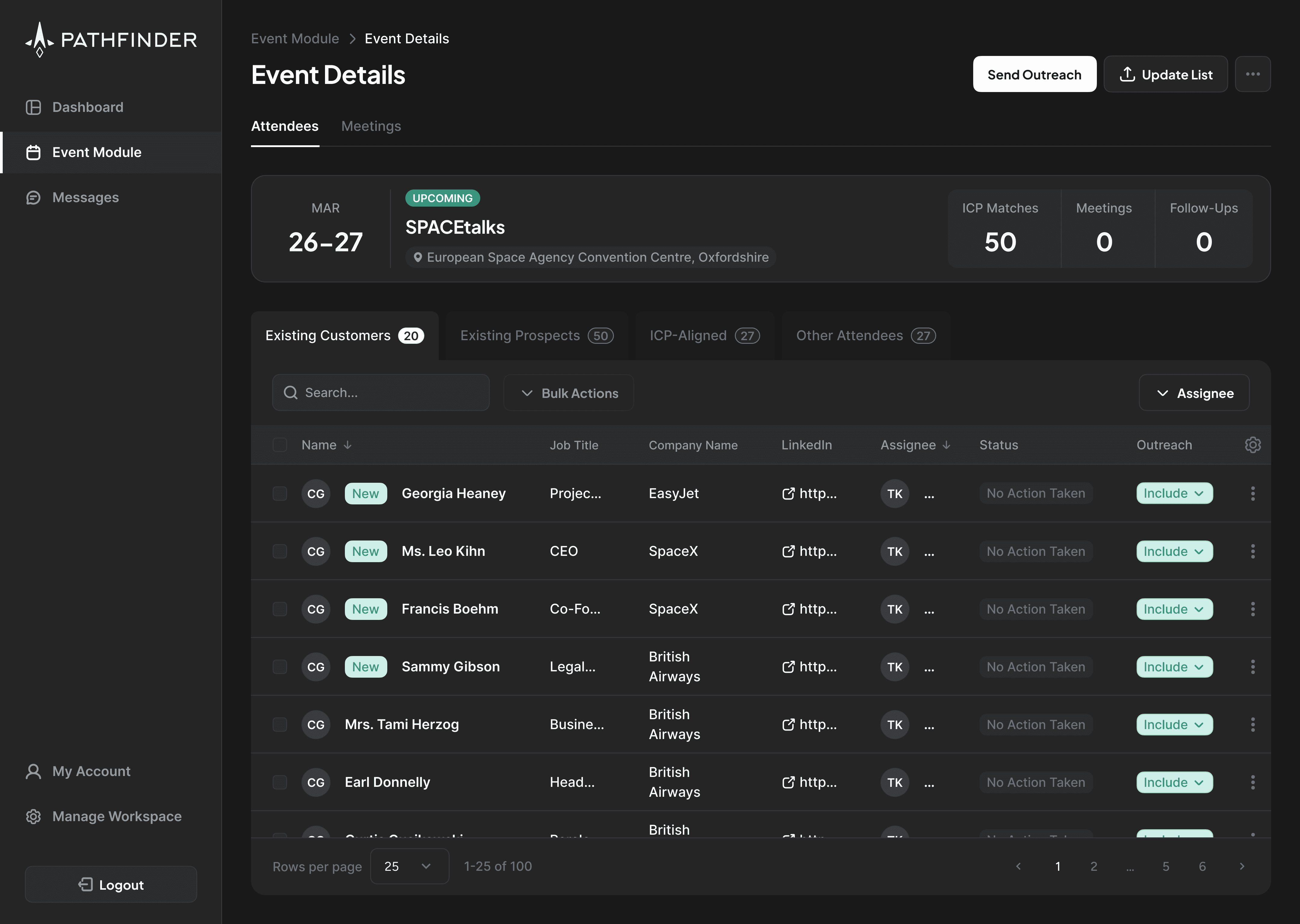
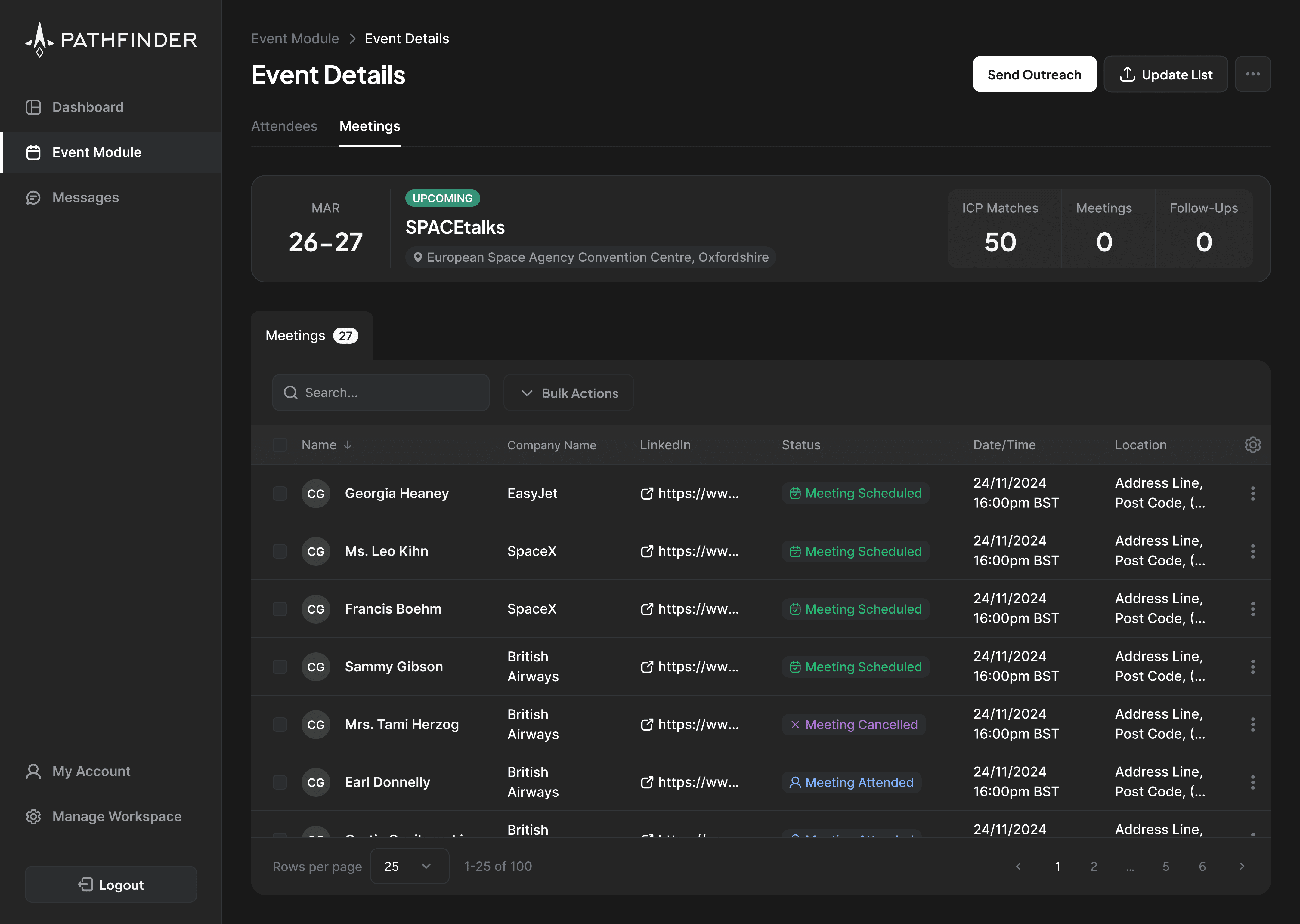
The outcome of this project was a clickable prototype that brought Pathfinder into a much clearer, more usable shape. By iterating closely with the client throughout the process, I was able to refine the flows, structure and interactions in line with how they wanted the platform to work, helping turn early ideas into a more coherent and validated product direction.
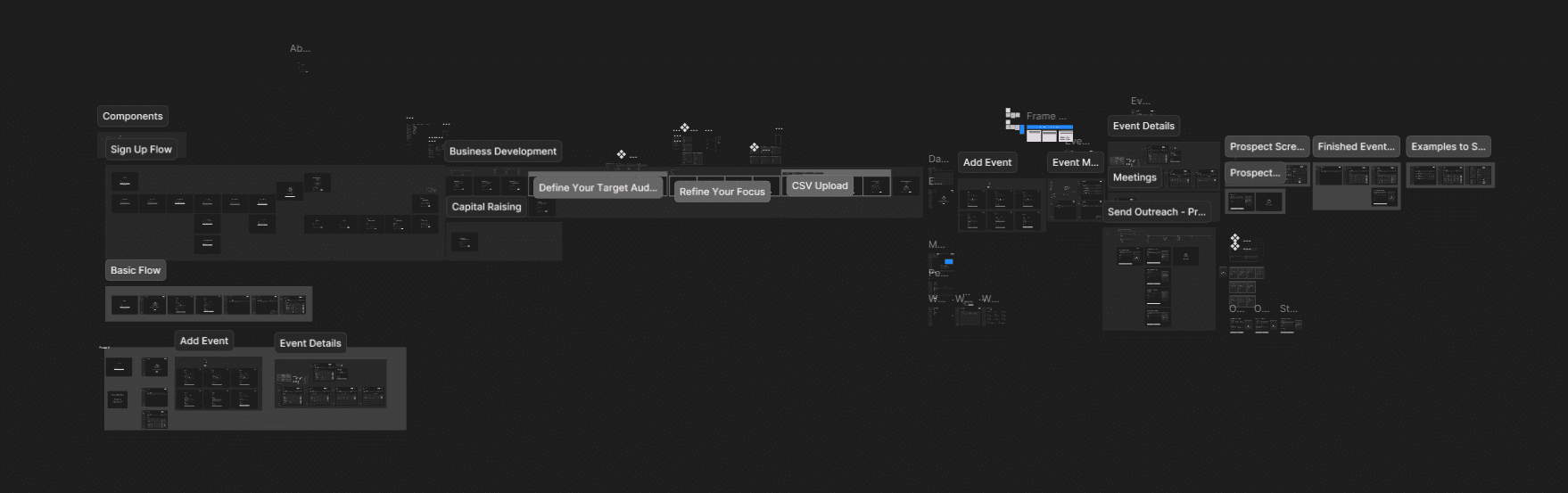
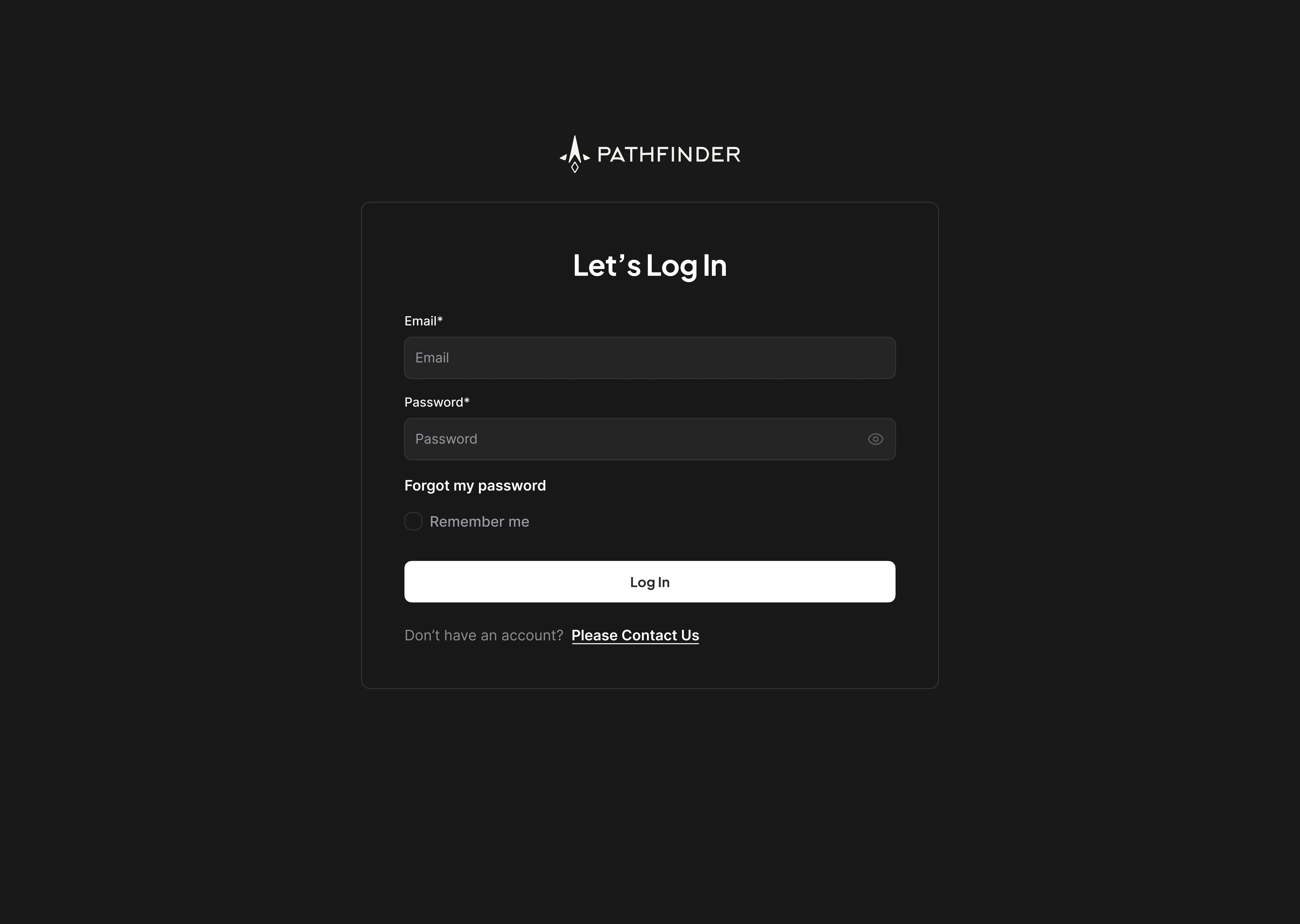
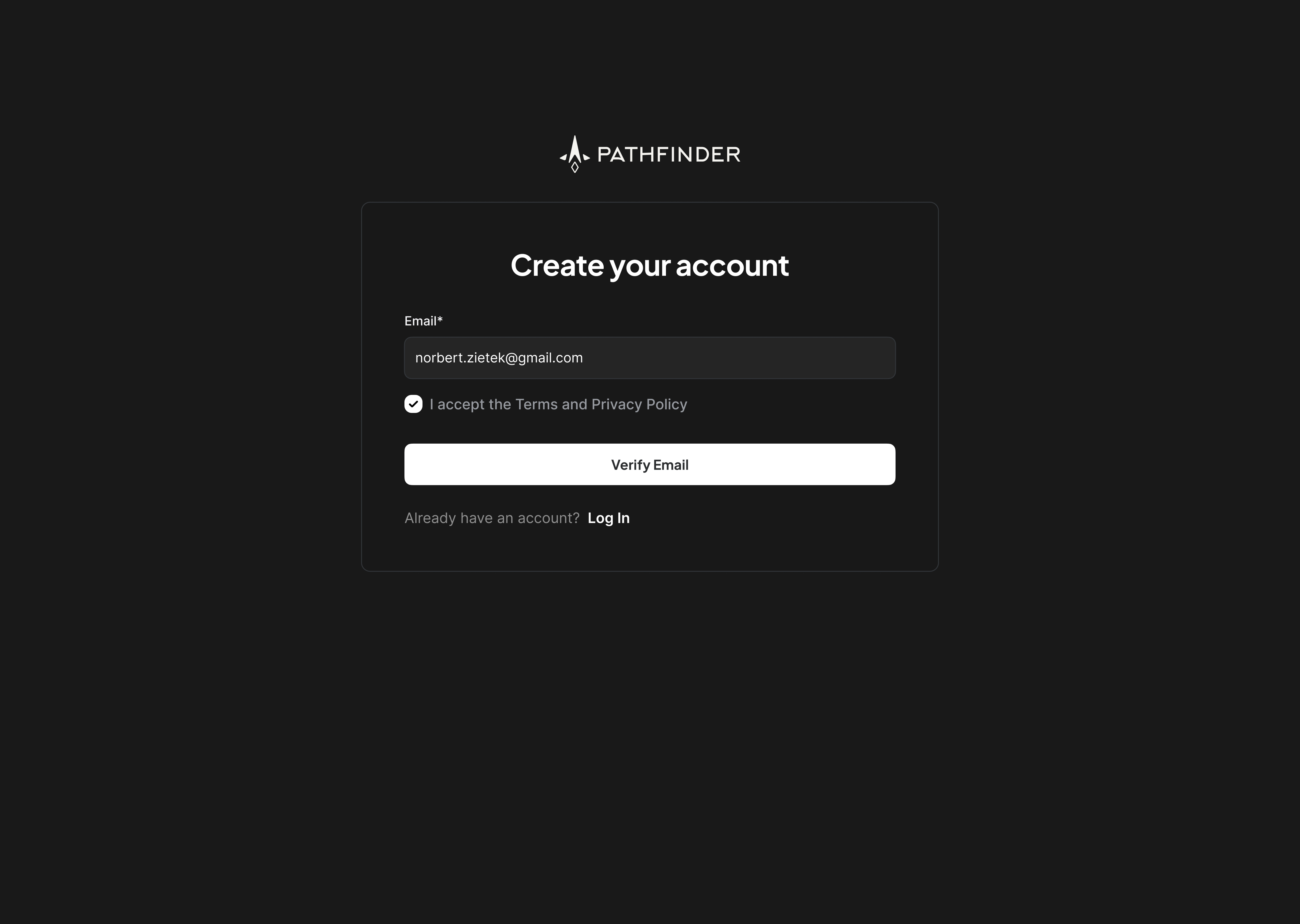
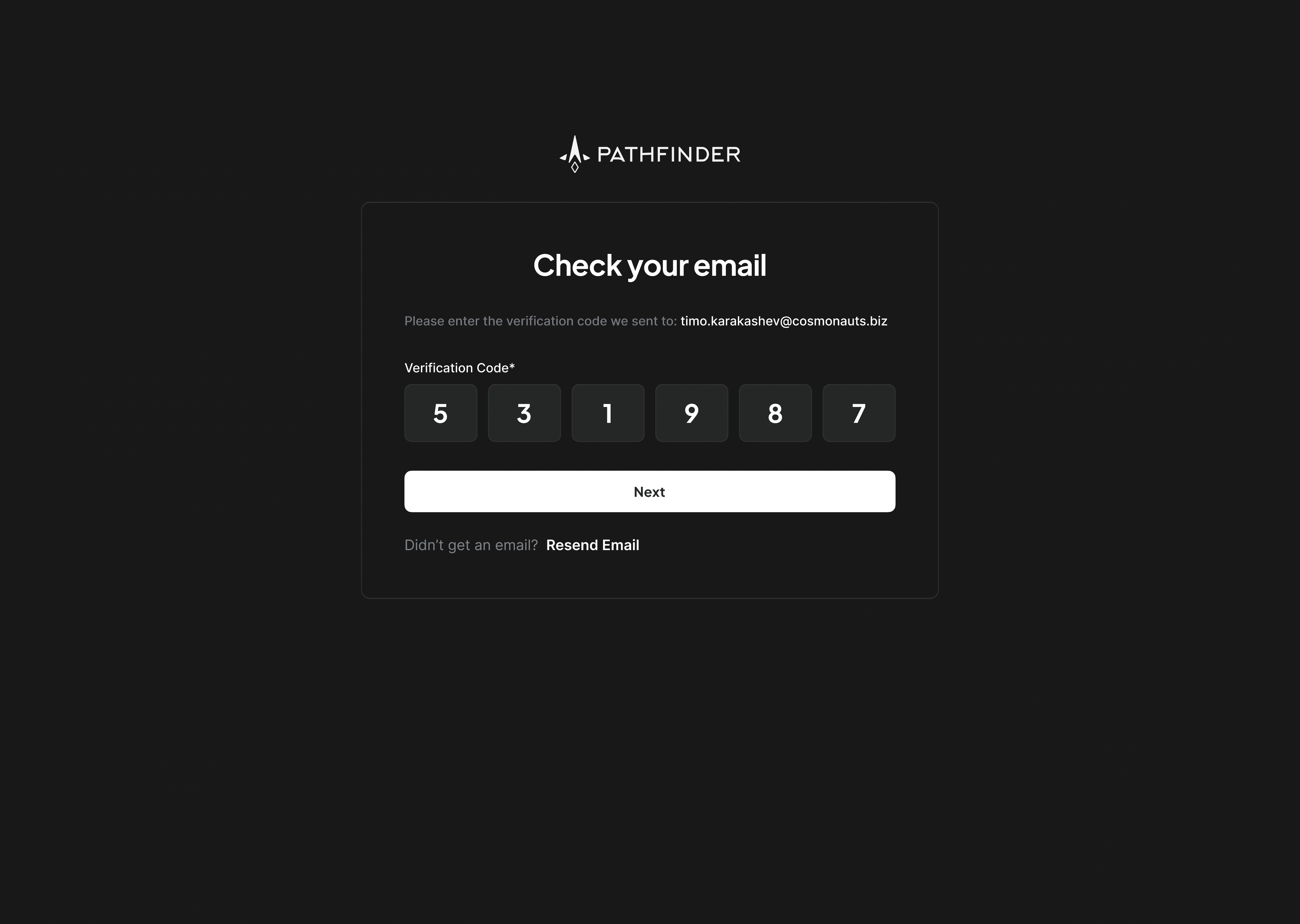
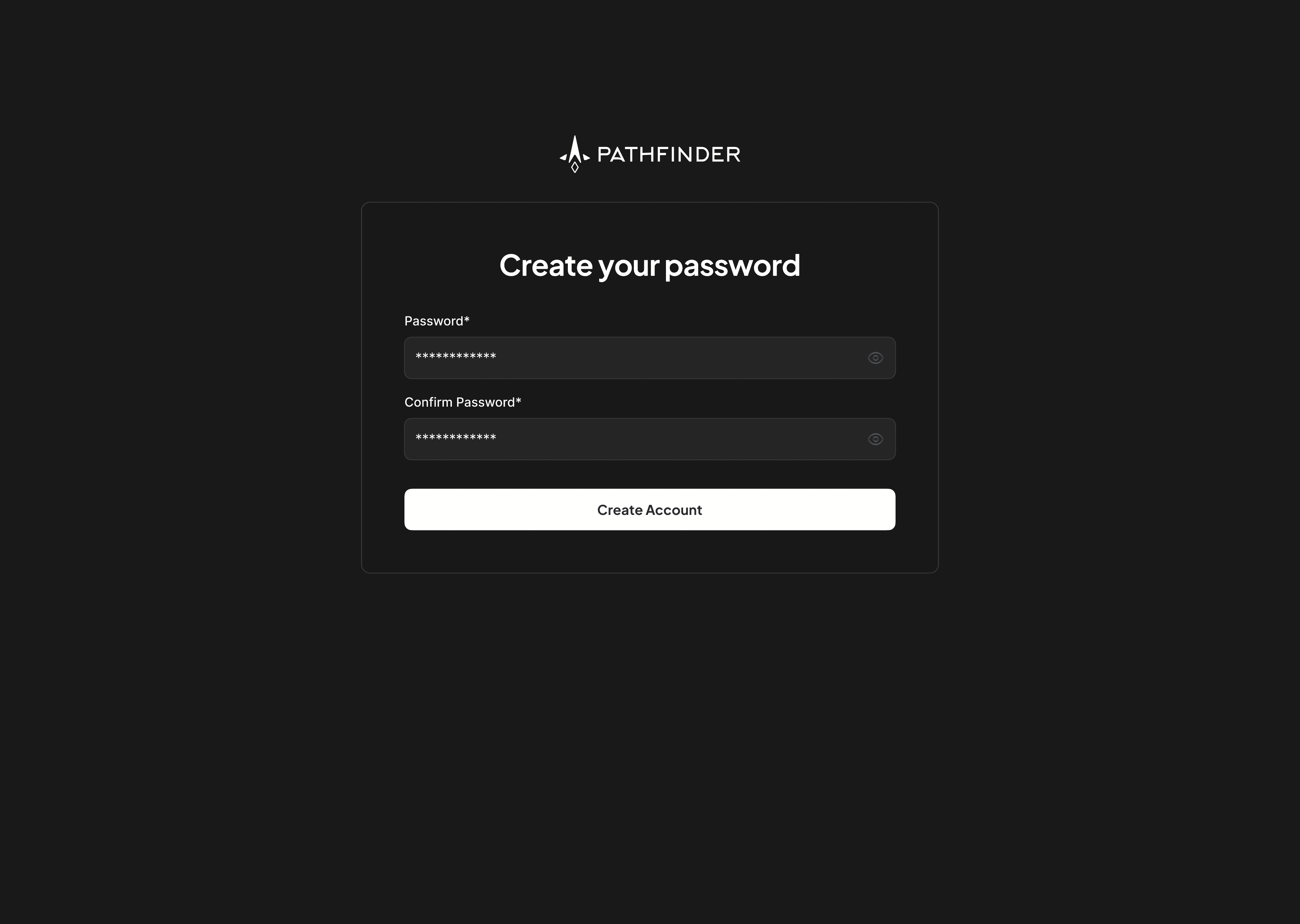
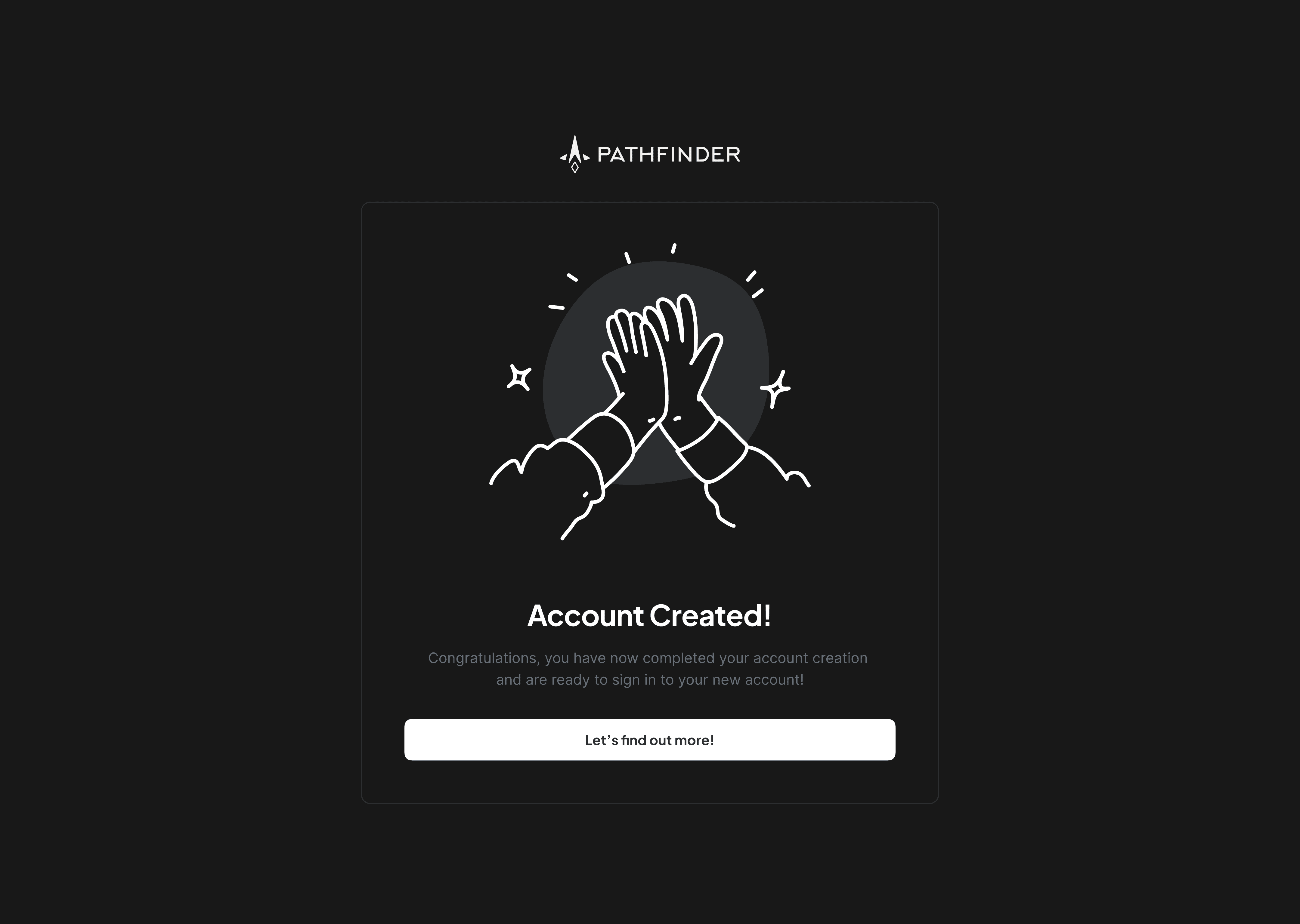
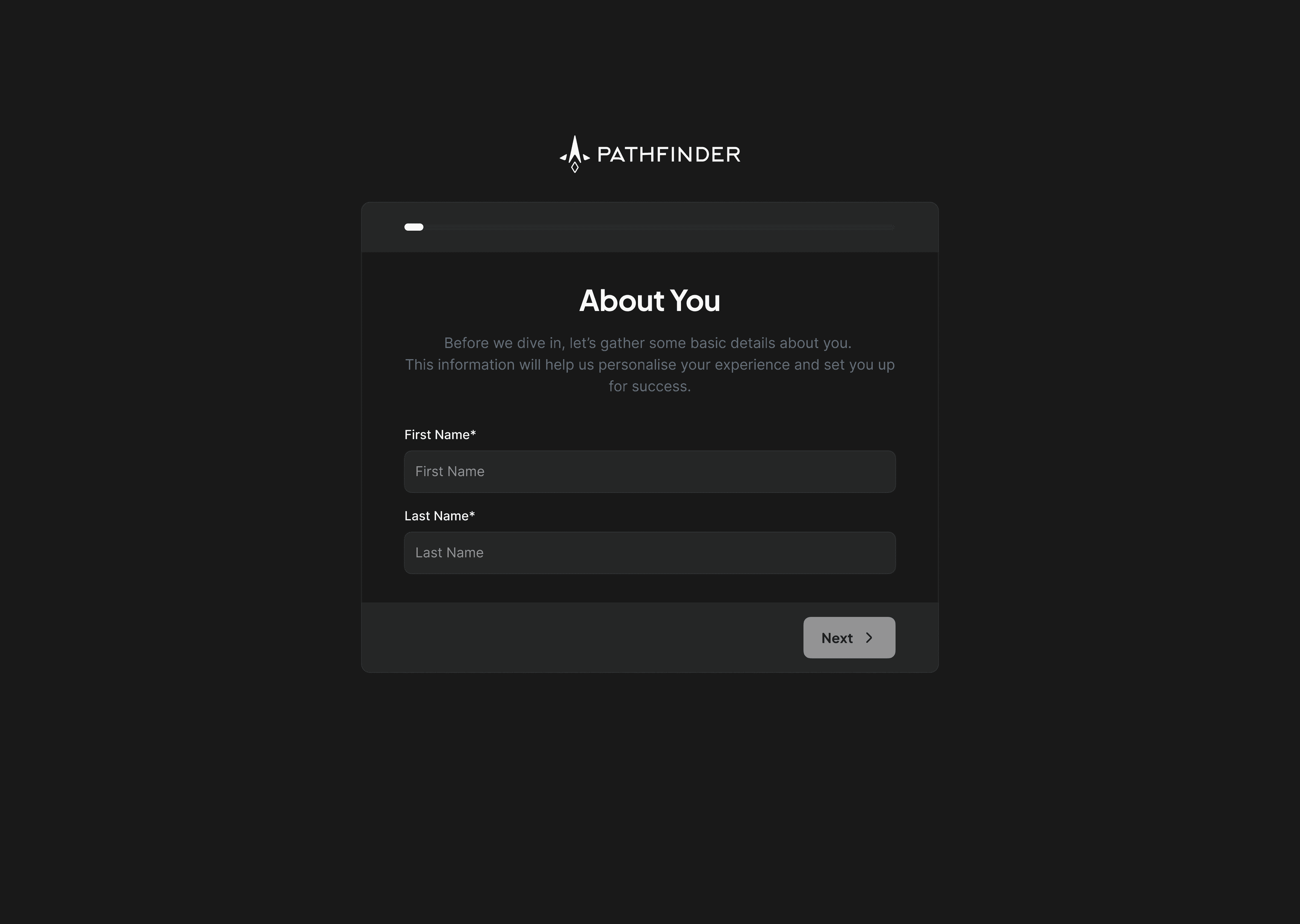
Onboarding
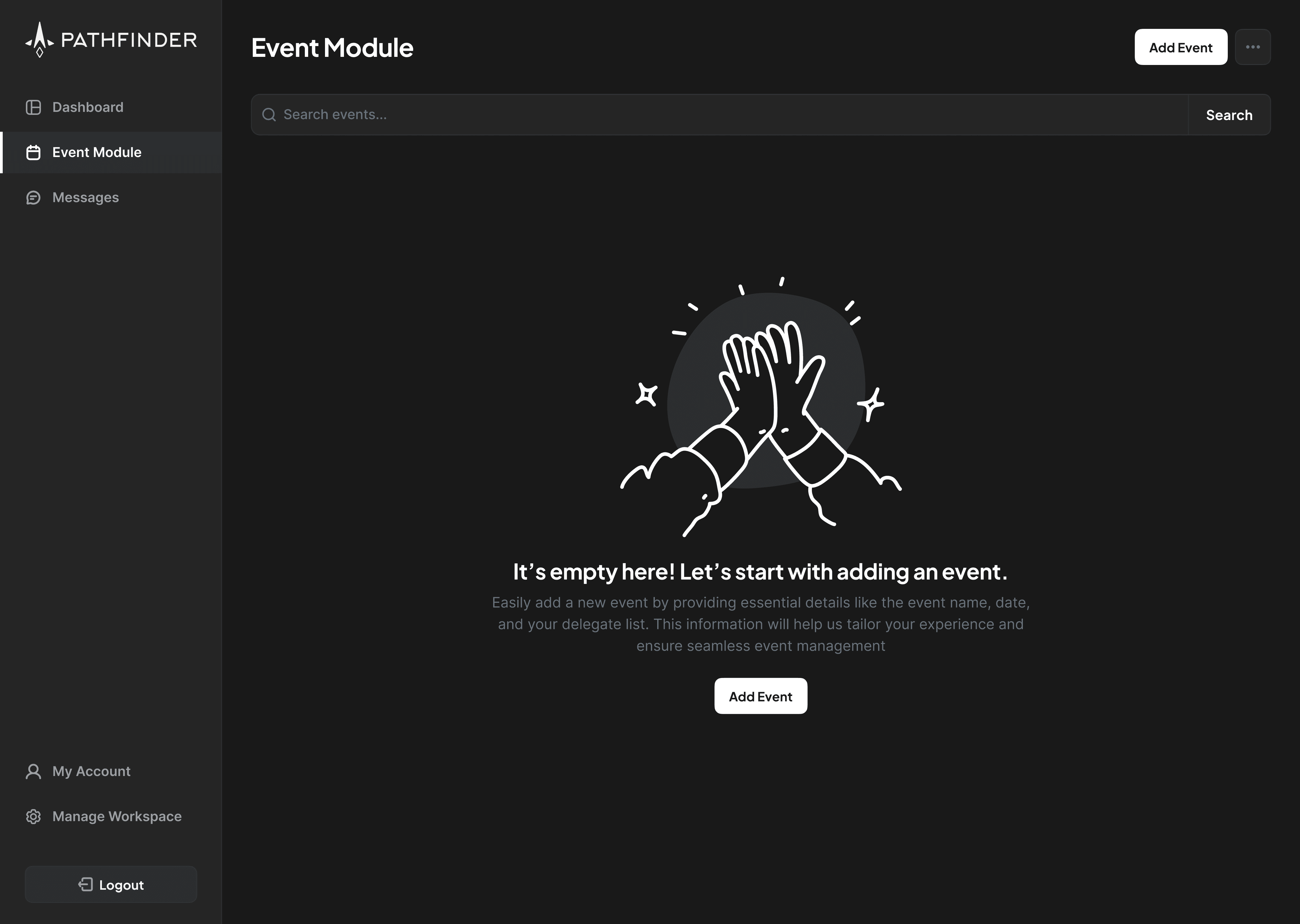
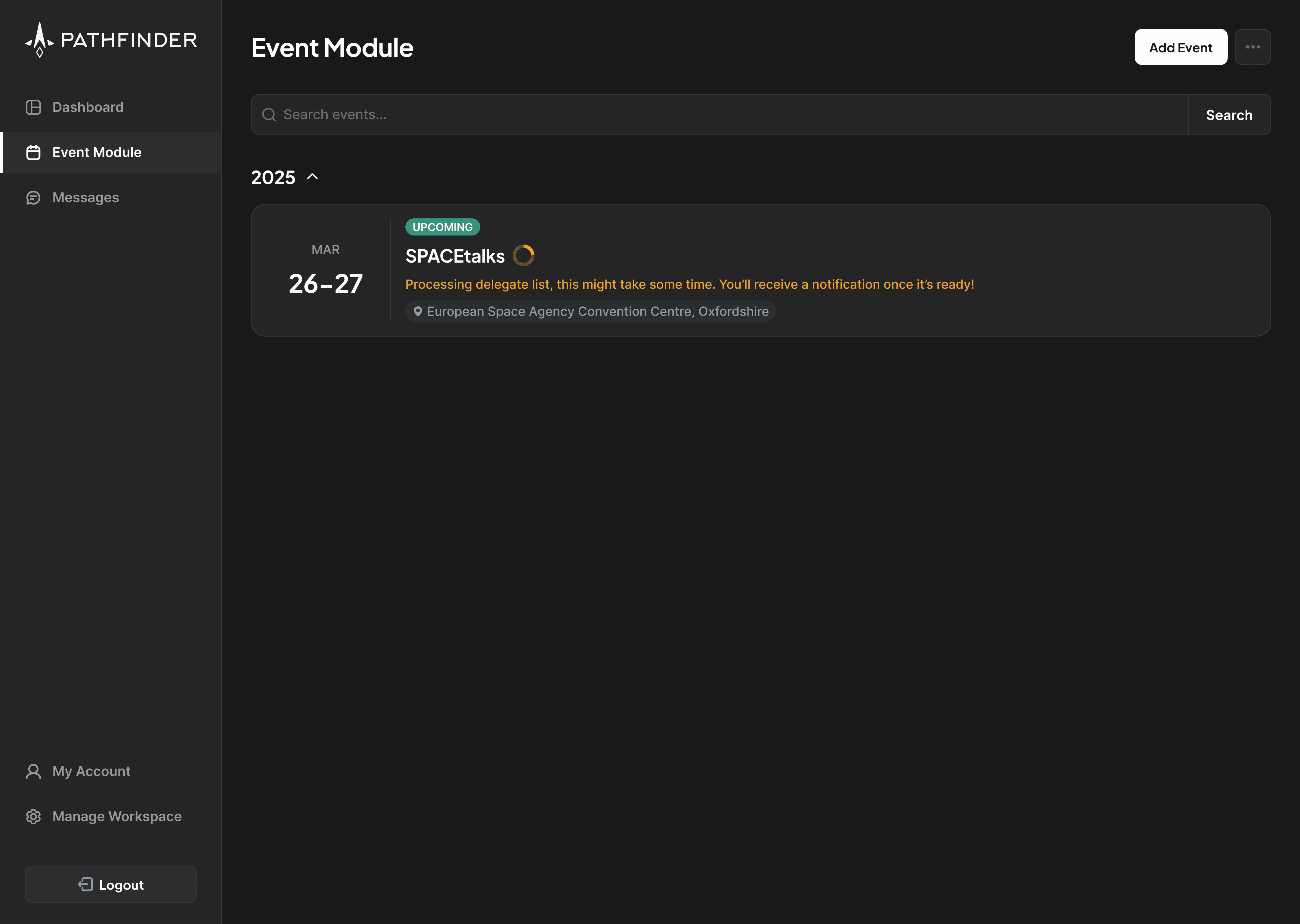
Event Module
Event Details
Prospect Details + Invite to a Meeting